

Beeways for pollinating insects
Increasing biodiversity and enriching the landscape

Beeway near a forest
Establishing networks of floral strips composed of herbaceous species and bulbs, including annuals and perennials, can enhancing the survival and spread of pollinating insects, increasing local biodiversity and enriching landscape heterogeneity. These flower strips can provide important ecosystem services by supplying shelter, foraging resources and breeding habitats from spring to autumn. “Beeways”, can be strategically integrated into urban landscapes, along pedestrian and cycling paths, or in conjunction with tree planting projects.
Context:
Beeways should be part of urban and peri-urban contexts where the loss of natural habitats, the increasing presence of seeled surfaces and intensive manintenance regimes have drastically reduced the presence and survival of pollinators. As key green infrastructure features, beeways aim to restore vital spaces for beneficial insects whilst also providing multifunctional benefits for wildlife and people.
Problem Description:
In recent years, there’s been a significant decline in pollinating insects caused by habitat loss, pesticide use and climate change. In urban contexts, the lack of flower habitats and the fragmentation of greenspaces worsens the situation. Beeways offer a concrete solution with low maintenance and high ecological impact that create continuous and functional habitats. They also increase public awareness, enhance the landscape and improve urban resilience.
Implementation Steps:
The methodology adopted for the creation of Beeways is based on a combined approach of ecological design and sustainable management of urban greenery. The project starts with the selection of herbaceous insect pollinated species (annuals, perennials and perennial bulbs), chosen according to the seasonality of flowering, ecological compatibility with the local environment and the ability to attract different types of pollinators. In particular, the use of perennial bulbs has proven to be very effective in ensuring early and stable blooms over time, widening the window of availability of nectar and pollen in the growing season. The actual preparation takes place through the identification of strategic areas in urban parks or alongside cycle-pedestrian paths, where Beeways can maximise both ecological and aesthetic value. The preperation work involves soil preparation, sowing and the definition of a low-maintenance management plan, which takes into account the natural cycles of plants and insects.
Stakeholder Engagement:
Beeways management can involve schools, environmental associations and citizen volunteers during the sowing, transplanting and/or monitoring phases. The community’s participation strengthens environmental awareness and a sense of territorial belonging. Public administrations play a key role in the promotion and enhancement of this green infrastructure.
Knowledge Types:
The practice integrates scientific knowledge (botany, ecology, entomology), agricultural practices (soil preparation, sowing) and local knowledge (native species, phenology, traditional uses of plants). This interdisciplinary approach increases replicability and effectiveness.
Replicability:
YES, the practice has been tested and replicated in multiple contexts and scales and therefore, can be easily transferred and/or adapted to other initiatives with similar goals.The practice has been tested and replicated in different contexts and scales. It can be transferred and/or adapted to other initiatives with similar objectives. Beeways have been successfully tested in urban parks and agricultural and forest areas, demonstrating good adaptability and high ecological effectiveness even in different contexts.
Key Success Factors:
The implementation of Beeways can benefit many different areas. From an environmental point of view, it helps increase urban biodiversity, the availability of habitats and resources for pollinators. The use of perennial bulbous species ensures continuous blooms throughout the year, offering support to numerous pollinator species even in the most critical periods.
The impact on landscape is very significant: the presence of seasonal blooms increases the aesthetic quality of public spaces, making them feel more welcoming and lived-in, especially in highly urbanised contexts. By contrast, new seedlings are hardly visible in their youthful phase, especially during the first years after planting and perform a rather limited landscape function; Beeways can improve public perception and aesthetic value of these young forests through creating more colourful surroundings and prolonged flowering periods.
From an educational and social standpoint, Beeways stimulate active participation in and awareness of environmental issues, creating opportunities for outdoor learning and strengthening the sense of community. Finally, there’s the ecosystem and economic impacts: by promoting pollination and biological pest control, Beeways generate indirect benefits for agriculture and environmental health, thereby reducing the need for engineered approaches.
Common Constraints:
Technical Challenges
Plant establishment and maintenance management: in some areas, plant species may not establish evenly, resulting in gaps or weeding issues. This problem can be addressed through a more targeted selection of species, by adapting planting techniques to the local context and targeted maintenance programs by trained operators.
Economic challenges
Management and specialised maintenance costs: Beeways require scheduled interventions and trained personnel, which can generate additional costs compared to traditional green areas. Cost mitigation can be achieved through efficient planning, the involvement of volunteers and through public and private sponsorship.
Social challenges
Public perception and vandalism: wildlfower areas can appear overgrown, prompting complaints. Awareness campaigns and educational outreach on the role of pollinators can reduce this problem.
Environmental challenges
Disturbances to pollinator habitats: human activities, such as trampling or improper mowing can reduce the ecological effectiveness of Beeways. This challenge can be solved by installing physical guards, selecting strategic routes, and monitoring insect populations.
Lessons Learnt:
Significant data emerged from the analysis conducted in the study "Designing innovative mechanisms to plan, implement, strengthen and manage green infrastructure in (peri)urban areas". It’s been found that almost all planted species attract pollinators from a wide range of different species and not limited to bees alone. Despite the small extension of Beeways, they prove to be effective in attracting a population of pollinators comparable to that of much larger areas, thus demonstrating the value and effectiveness of these interventions.
Positive Impacts:
- Improved conflict mitigation
- Improved recreational value
- Improved scenic beauty
- Improved societal support
Scientific validation
Numerous studies reveal the positive role of Beeways in improving pollinator conservation, increasing biodiversity and for providing ecosystem services in agriculture and urban areas. Sources include European guidelines and academic publications related to pollinator strips, wildflower meadows and bee corridors.
Validation by experts or entities
A study by the University of Milano-Bicocca at Parco Nord Milano has highlighted the clear positive impact of Beeways. Despite the relatively small plot size, the data indicates that Beeways support a pollinator abundance and variety comparable to the park's wooded areas. This demonstrates that even small flowery areas can attract significant numbers of pollinators and contribute significantly to biodiversity. Primary pollinators observed are members of the families Syrphidae, Andrenidae, Apidae, Halictidae, and Megachilidae. Notably, the following taxa were documented (based on data obtained from the pre-monitoring phase of the LIFE20 PRE/BE/000008 - UrbanGreeningPlans project) Eristalis tenax, Myathropa florea, Sphaerophoria spp., Andrena spp., Bombus spp., Nomada facilis, Halictus spp., Lasioglossum spp., Seladonia subaurata, Anthidium oblongatum, Megachile centuncularis, Hoplitis leucomelana. Other studies conducted in PNM's area, within the SUPERB project, demonstrate that the presence of urban forests and a more natural management of meadows result in greater diversity and abundance of wood-nesting bees.
Media
-
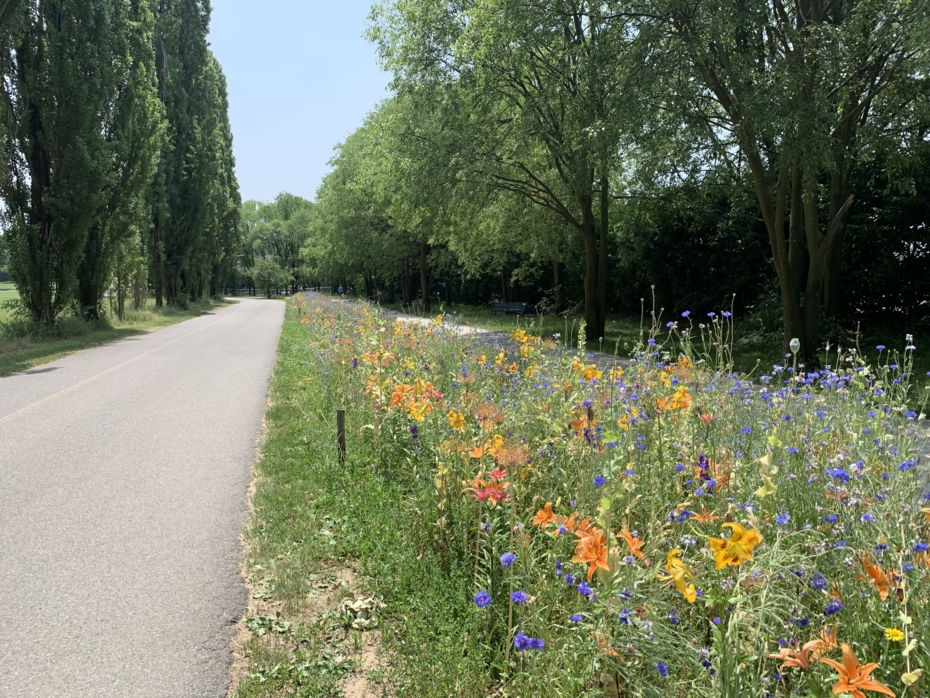
Beeway that runs along one of the main roads of Parco Nord Milano -
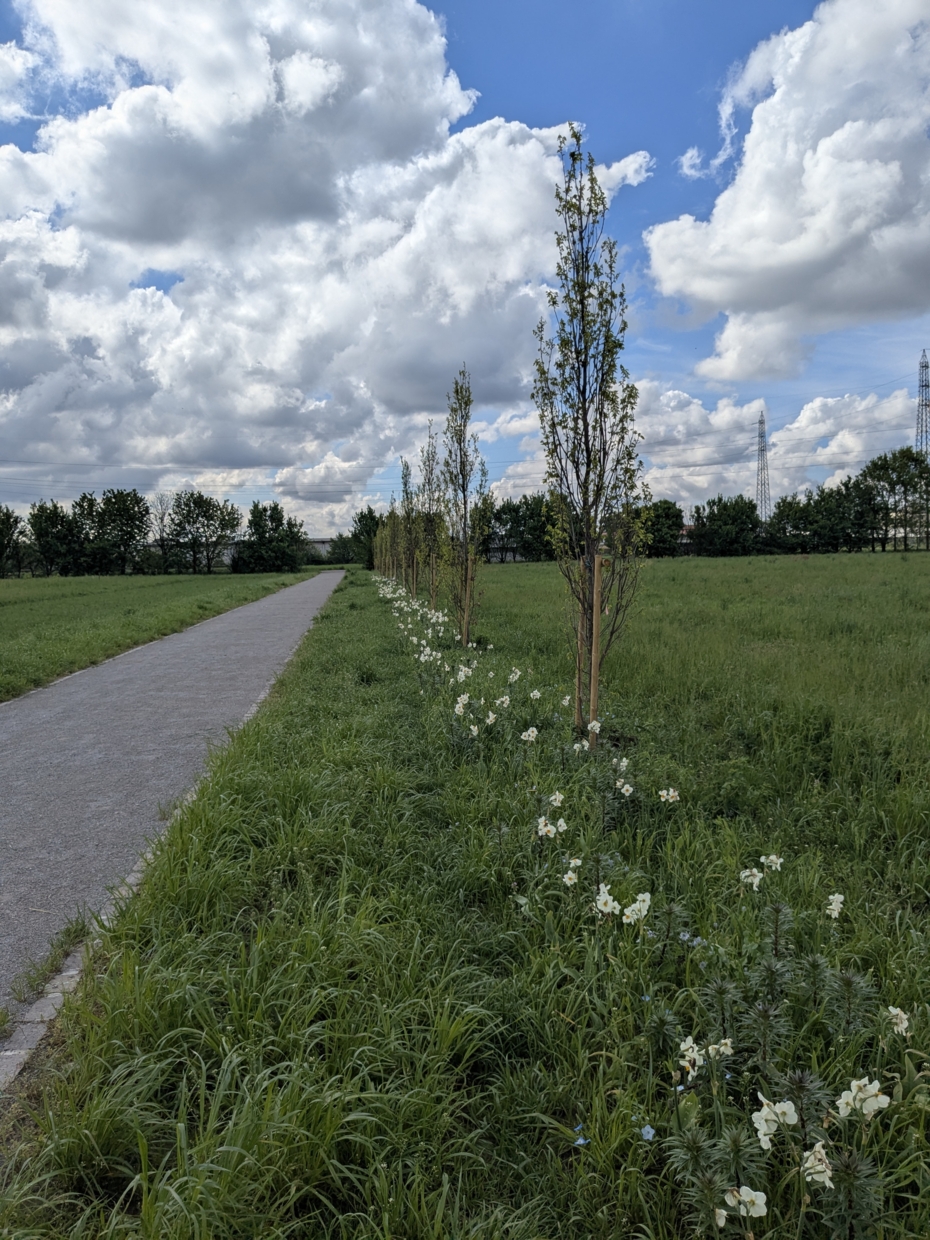
Beeway alongside a new path -
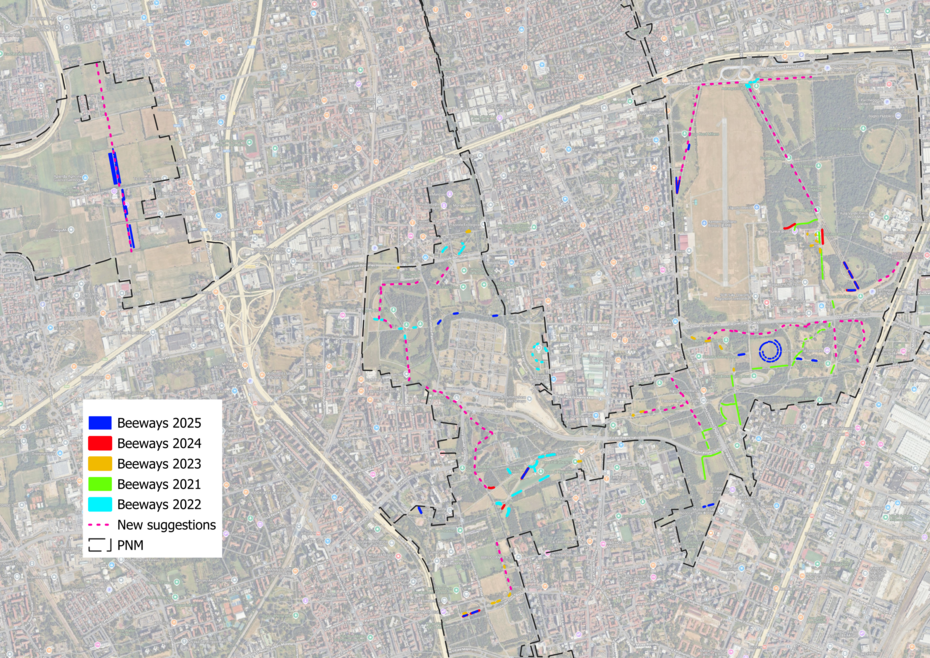
Map of Beeways in Parco Nord Milano over the years -
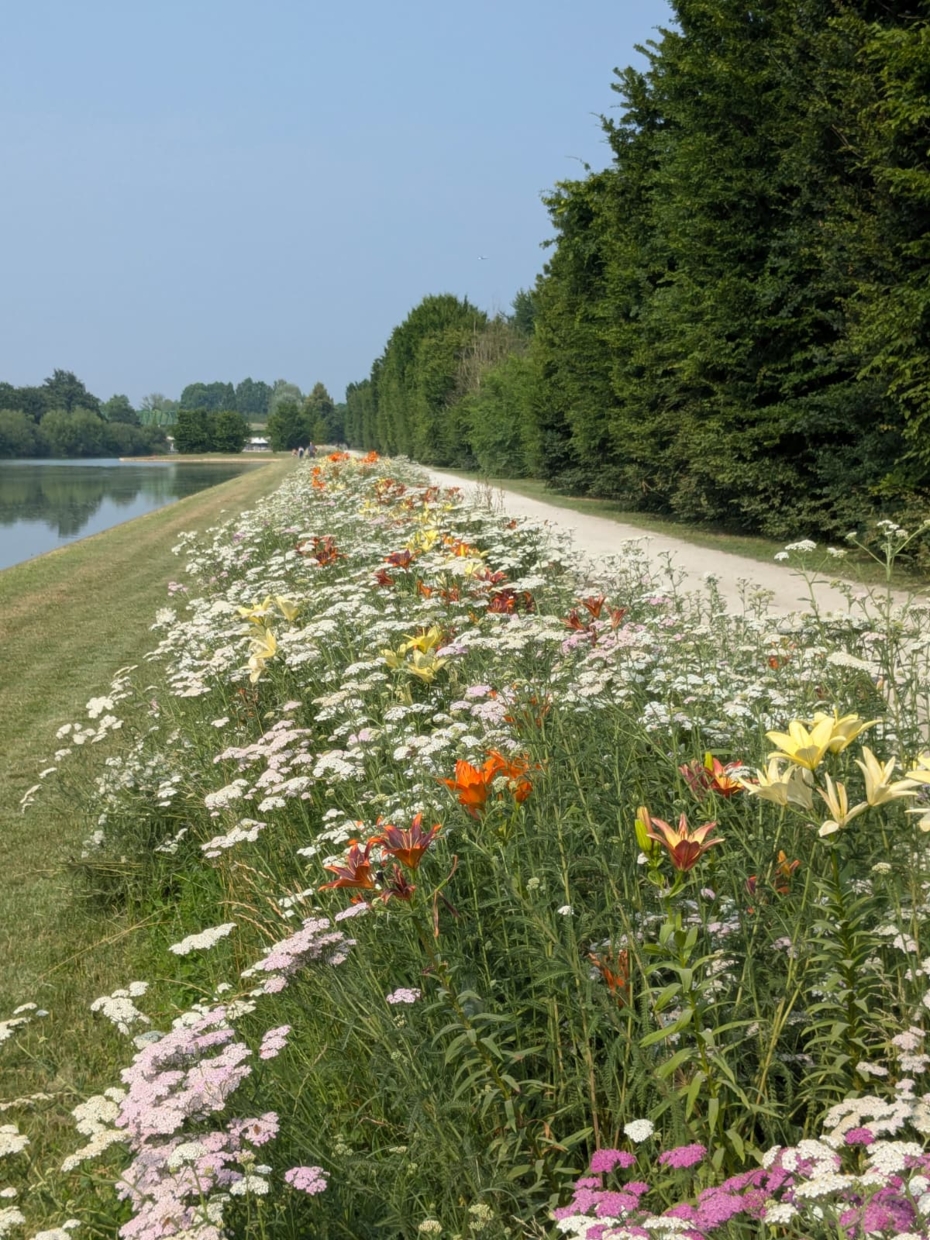
Beeway close to Lake of Niguarda -
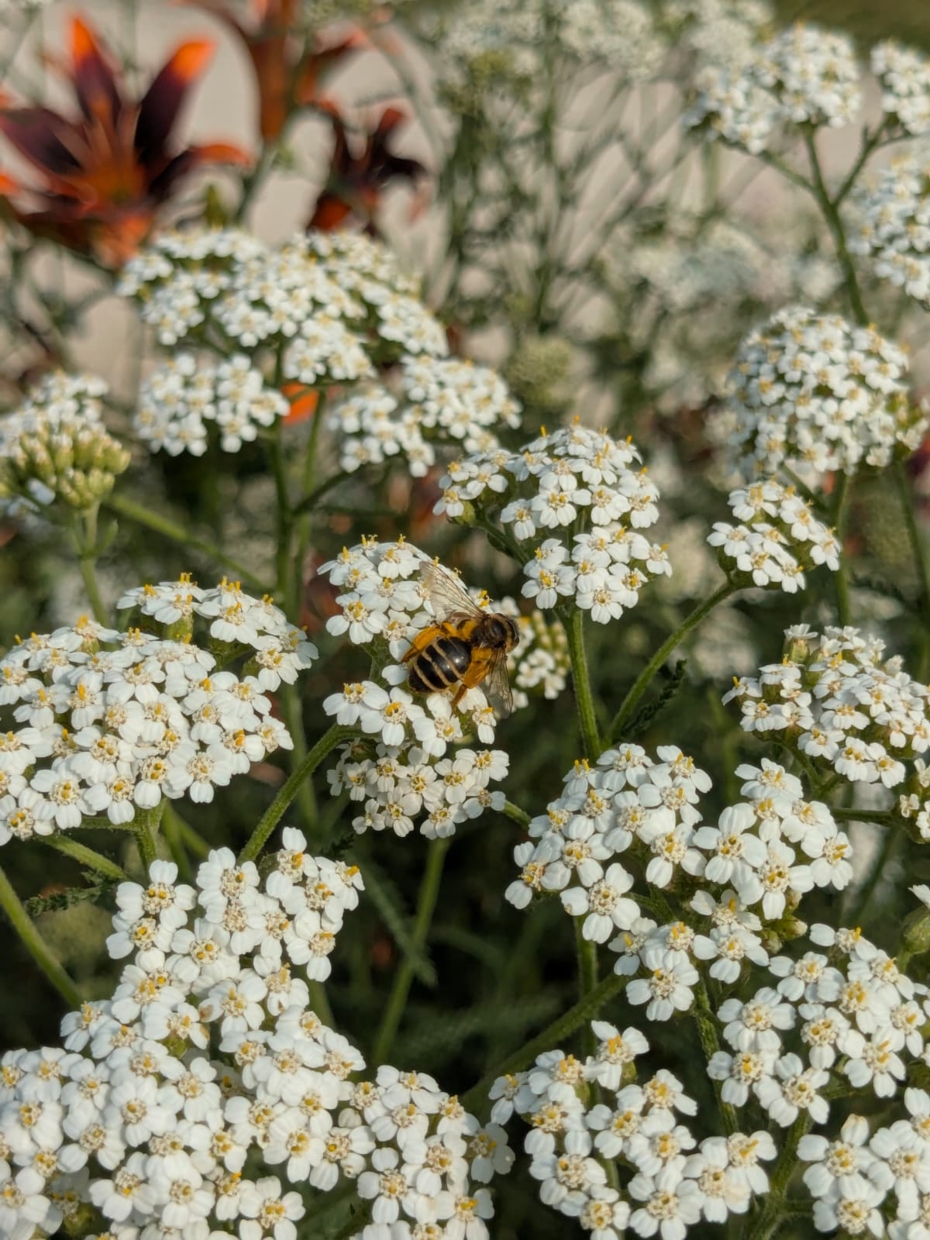
Pollinator attracted to blossoms within a Beeway
- Active Restoration
- Social & Stakeholder
- Urban and peri-urban forests
- Landowners & Practitioners
- Planners & Implementers
- Afforestation, reforestation
- Connectivity and landscape diversity
- Other protective and regulatory functions
- Social and cultural values
- Show 1 more
- Continental
- Mediterranean
- Italy
- Sierra Leone
- Economic
- 400 hectars