

Landowners / Practitioners
-

Leo, forest manager
“I need to create a new management plan for my forest area. I want to increase biodiversity and adapt my forest to climate change, whilst not changing much of our current way of doing things, and I would like to understand how to move forwards."
This Restoration pathway is for you if you directly manage or work on forested land and want to enhance its ecological health, resilience, and productivity. Whether you oversee a private forest, community woodland, or small-scale forested landscape, this guide provides practical advice on restoration techniques, from choosing tree species and managing natural regeneration, to enhancing structural diversity, soil health, and habitat value. Learn from real-world examples, explore risk mitigation strategies, and find actionable guidance to make your land thrive while supporting biodiversity, climate resilience, and long-term sustainability.
Introduction
1. Understanding restoration needs and challenges of climate change
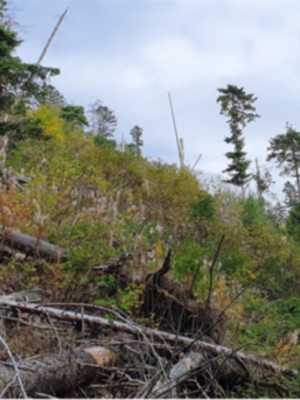
In this chapter you will find out what forest restoration is, how diverse it is, and for what purposes it is applied. Climate change adaptation plays a special role and receives it own sub-chapter (“1.2 What is forward looking restoration and why adaptation is essential). Also, the main factors causing the loss of forest biodiversity, forest health and functionality are explained (“1.3 Degradation causes and drivers”), as well as how and which goals for restoration may be set (“1.4 Restoration goals and methods”).
2. Practical Restoration Options/ Types
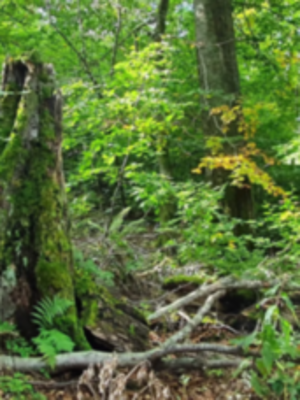
Depending on the restoration goals and the specific circumstances, one or several different restoration approaches or measures may be applied. In this chapter we introduce common and generally important restoration options, and provide you with tools and further reading materials that can help you with the implementation. The focus lies on measures that act upon single trees up to single forest stands. Measures at landscape scale or that are particularly cost-intensive or require profound ecological understanding and often also official permissions like introducing rare animals are not covered here but can be looked up in our Restoration Practices Knowledge Base.
3. Learning from restoration practices
Successful restoration is not a one-time action, but a journey that takes time, care, and flexibility. It’s about learning by doing and staying engaged over the years. Successful restoration combines ecological know-how with social and economic understanding – and works best when landowners, neighbours, and local communities are part of it. Every site is different, so what works in one place may not work in another. By sharing experiences and learning from others, you can find what fits your land best. Restoration is also a great way to connect with people, exchange ideas, and make your forest part of something bigger. Don’t be afraid of trial and error – every step teaches you something new.