


Landowners / Practitioners
1.2 What is forward-looking restoration and why adaptation is essential

Restoration is not only about bringing back what has been lost. It is also about getting ecosystems ready for the future. Forests today experience conditions that are changing faster than ever – think of climate change, new types of disturbances, invasive species, land-use pressure, and other human activities. In many cases, restoring a forest to exactly how it used to be is no longer possible, or even helpful—especially if those past conditions no longer meet society’s needs under today’s environmental realities. In these situations, restoration goals need to look ahead and take future conditions into account.
Forward-looking restoration accepts that ecosystems are always changing and adapting. Instead of trying to recreate a fixed past state, this approach focuses on building forests that are healthy, resilient, and able to provide important ecological and social benefits in the future. This means thinking in advance about changes such as warmer temperatures, altered rainfall patterns, more frequent fires or pest outbreaks, and new interactions between species. These expected changes should be considered from the beginning when setting restoration goals and methods.
In practice, this may mean choosing tree species or seed sources that can handle warmer or drier climates, creating more diverse forest structures that can better cope with disturbances, or improving connections between habitats so species can move and adapt as conditions change. Historical reference ecosystems are still important, but they are used alongside scientific projections, models, and local knowledge about future trends.
Adaptation is central to forward-looking restoration. Because the future is uncertain, restoration plans need to be flexible and able to change over time. This includes setting adjustable goals, carefully monitoring results, and being willing to change management actions when needed. Working together—bringing practitioners, scientists, and landowners into the process—is also essential, as it combines hands-on experience with the latest scientific knowledge.
Restoration practitioners play a crucial role in making sure that today’s efforts lead to forests that are not only restored, but also resilient. These forests should be able to cope with future disturbances while continuing to provide important benefits such as wildlife habitat, clean water, carbon storage, and livelihoods for years to come.
Related resources
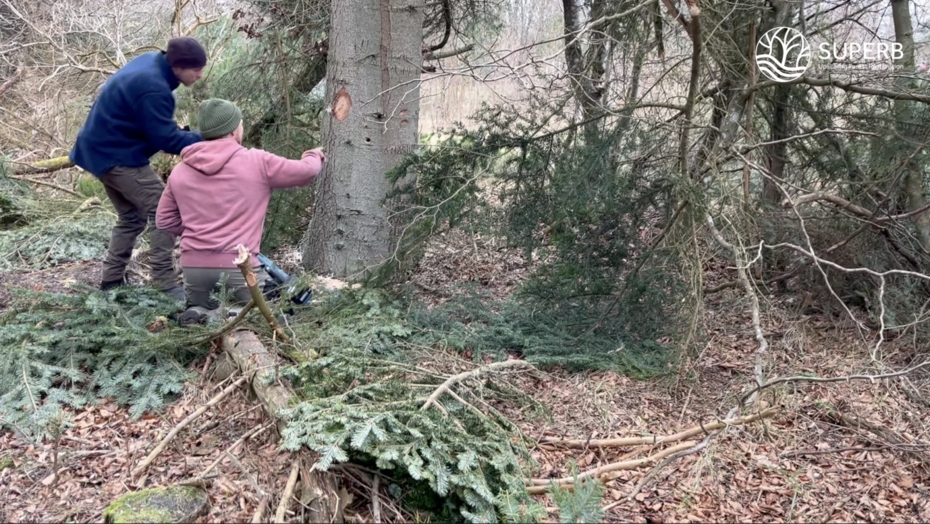
Young Guardians in the Forest
In our demo site in Thy, Denmark, students from Billede School joined the SUPERB project to get hands-on with nature restoration. Led by experts from Naturstyrelsen, the students didn’t just learn about biodiversity in the classroom—they ventured into the forest, rolled up their sleevesand helped to create microhabitats.
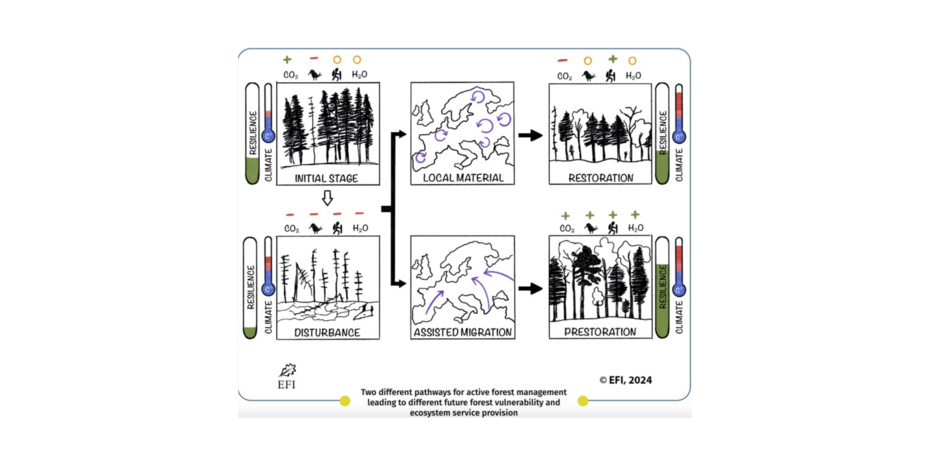
How to strengthen the European forest carbon sink through prestoration: integrating active restoration and adaptation
Active forest restoration combined with assisted Active forest restoration combined with assisted migration (prestoration), i.e. using always the climatically most suitable European tree species and populations, has the long-term potential to enhance carbon sequestration significantly compared to restoration efforts without assisted migration.
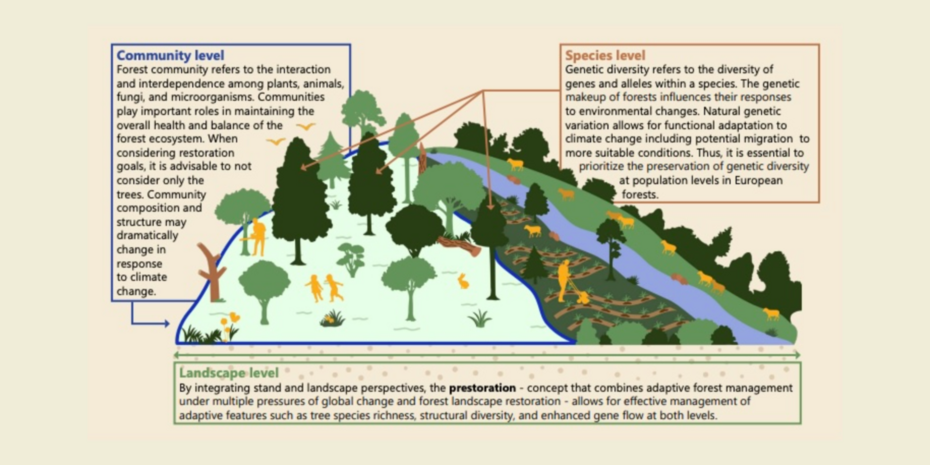
SUPERB’s Policy recommendations for the EU Nature restoration Law
SUPERB aims at large scale forest restoration in Europe, combining scientific and practical knowledge to drive actionable outcomes. This policy brief is based on the concepts underpinning this approach and provides four recommendations for changes to the proposed EU Nature Restoration law.

Seed4Forest
Seed4Forest is a Europe-wide decision-support tool that guides users in selecting climate-resilient tree species, species mixtures, and provenances for forest restoration and management. It integrates up-to-date scientific models—including species distribution, productivity, mixture suitability, and provenance guidance—to assess the performance of multiple species under current and future climate conditions. By combining species- and genetic-level information, the tool enables spatially explicit analysis and supports evidence-based adaptation strategies, such as assisted migration.