

Landowners / Practitioners
3.2 UN Decade on Ecosystem Restoration good practices

To promote mutual learning and knowledge sharing among restoration practitioners – and thereby strengthen their capacity to implement and scale up ecosystem restoration – the United Nations Decade on Ecosystem Restoration Taskforce on Best Practices (led by the Food and Agriculture Organization of the United Nations, FAO) has developed a framework for collecting and disseminating good practices for ecosystem restoration. This has been integrated into the Framework for Ecosystem Restoration Monitoring (FERM) platform (created by the FAO-led Taskforce on Monitoring). As part of this effort, a template for gathering good practices has been developed, which defines what constitutes a good practice, outlines assessment criteria based on the principles of ecosystem restoration, and provides step-by-step guidelines for a standardized review process. The close to 2000 good practices cover diverse ecosystems globally, farmlands, forests, freshwaters, grasslands, shrublands and savannahs, mountains, oceans and coasts, peatlands and urban areas. A common search engine has also been developed, allowing users to search, filter, and access a wide range of restoration practices tailored to their context and needs. In addition to the good practices presented here in the Forest Knowledge Gateway, it gathers practices from all over the world, collected from the FERM Registry, LIFE GoProFor, Panorama - Solutions for a Healthy Planet, and the World Overview of Conservation Approaches and Technologies (WOCAT) databases.
Related resources
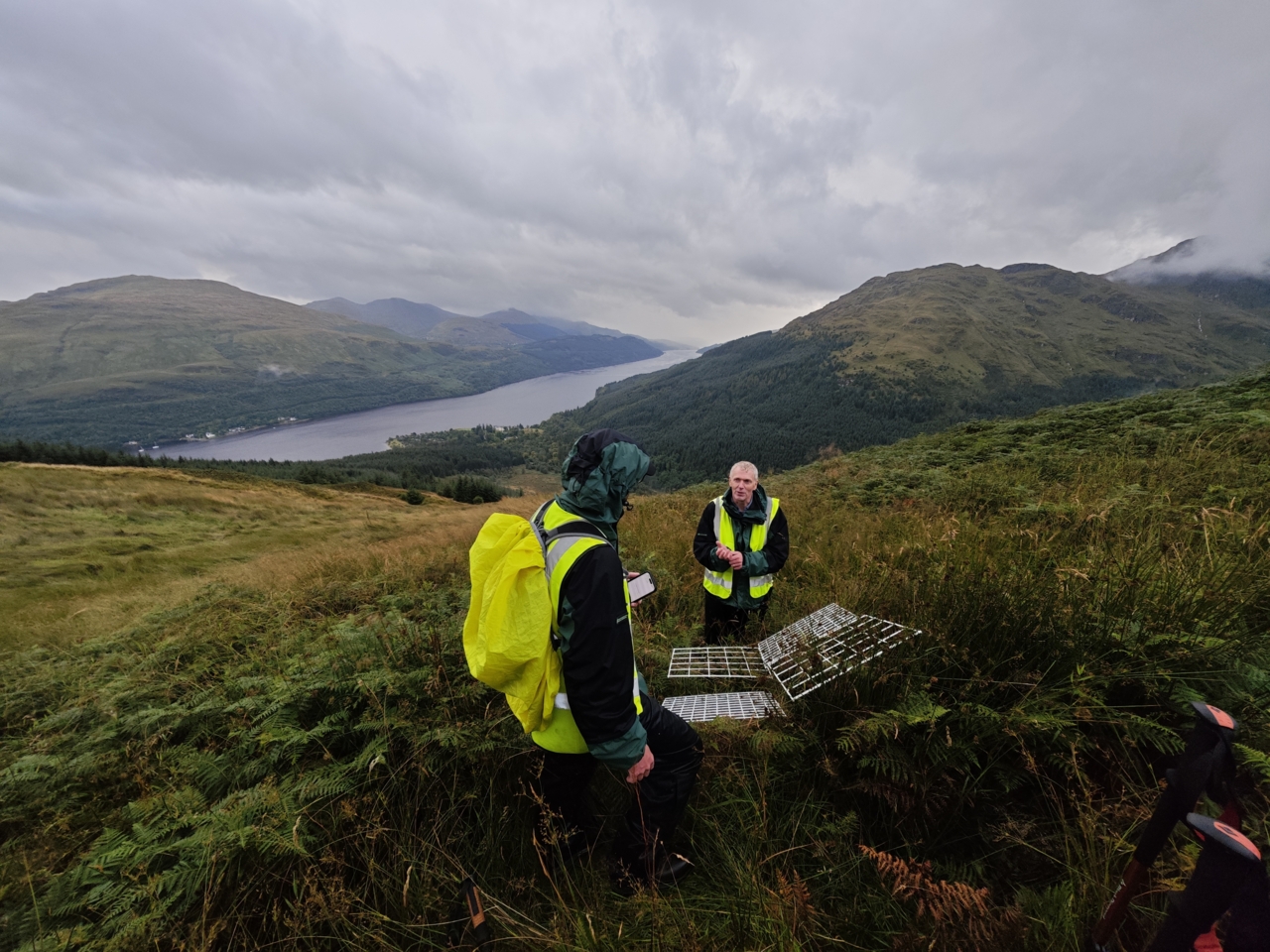
High elevation planting to expand forest cover above the current treeline
About three-quarters of Scotland’s forested land is made up of non-native plantations, mostly Sitka spruce. In many upland areas, productive tree growth is limited above 300 to 350 meters elevation due to wind exposure, poor soils, and grazing. These conditions create fragile open land with slope instability, low biodiversity, and simplified landscapes. High-elevation planting aims to restore the natural transition zones, improve slope stability, and enhance habitat diversity and resilience.
- Active Restoration
- Planning & Upscaling
- Social & Stakeholder
- Funders & Investors
- Planners & Implementers
- Policy Actors
- Afforestation, reforestation
- Climate change mitigation
- Connectivity and landscape diversity
- Other protective and regulatory functions
- Risk mitigation and disturbance prevention
- Soil health
- Atlantic
- United Kingdom
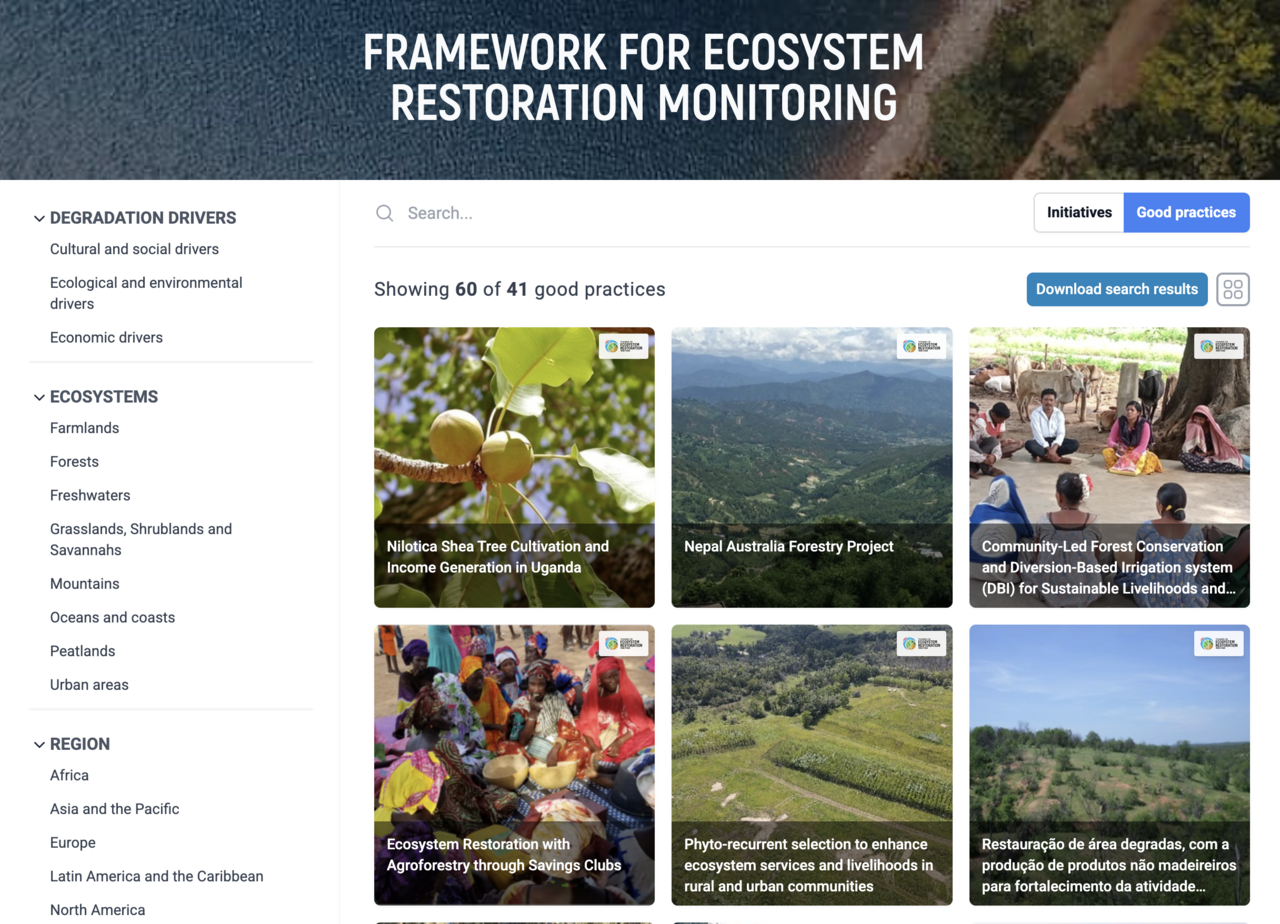
The FERM Common Search Engine for Good Practices
The FERM (Framework for Ecosystem Restoration Monitoring) Common Search Engine is a digital tool developed by the Food and Agriculture Organization (FAO) that allows users to find and share good practices in ecosystem restoration. It consolidates restoration practices from four collaborative platforms: the FERM Registry, LIFE GoProFor, Panorama Solutions and WOCAT. The search engine helps promote these practices, prevents mistakes, encourages learning and tracks restoration progress as part of the UN Decade on Ecosystem Restoration.