

Landowners / Practitioners
2.3 Enhancing structural diversity

Many forests in Europe, whether dominated by conifers, broadleaves, or mixed species, are often structurally simple. Trees tend to be of similar age and size, and deadwood is limited. While such forests can be productive, they provide fewer habitats for wildlife, are less resilient to storms, pests, or drought, and offer less visual interest for recreation. Enhancing structural diversity by increasing the variety of tree species, ages, sizes, and canopy structures is a key way to make forests more ecologically rich, resilient, and enjoyable.
Structurally diverse forests provide a wide range of habitats for forest-related biodiversity. Standing dead trees, fallen logs, old trees with cavities, loose bark, and decaying branches all offer homes for birds, bats, insects, fungi, and other organisms. Varied tree heights and canopy layers create microclimates that support different species. These benefits are visible both within individual stands and across the wider landscape, where a mosaic of forest types and structures strengthens ecological connectivity and overall ecosystem resilience.
Enhancing structural diversity can start in new forests or in existing, uniform stands. In non-forested areas, using a mix of native and climate-adapted tree species is an effective first step. Planting in small groups or irregular patterns instead of straight rows of single species encourages a natural-looking structure and heterogeneous light patterns and microclimates. Where natural regeneration occurs, planting additional tree species can increase structural diversity and resilience over time.
In existing homogeneous stands, several approaches can gradually increase structural complexity. Retaining old or ecologically valuable trees and leaving or creating standing and lying deadwood (see also section 2.4 Deadwood, veteranisation) provides immediate habitat benefits. Creating small canopy gaps or irregular openings allows light to reach the forest floor, promoting natural regeneration and understory growth. Enrichment planting under the existing canopy or supporting natural regeneration further increases species and structural variety. Intentionally creating deadwood, for example by cutting or even damaging selected trees in a controlled way, adds microhabitats that benefit multiple species.
Over time, these practices help transform simple, uniform forests into dynamic, resilient ecosystems. Structurally diverse forests support richer biodiversity, should recover more effectively from disturbances, and provide more attractive and enjoyable spaces for recreation. By taking a planned approach to enhancing structure, landowners and practitioners can increase both the ecological and social value of their forests for generations to come.
Related resources
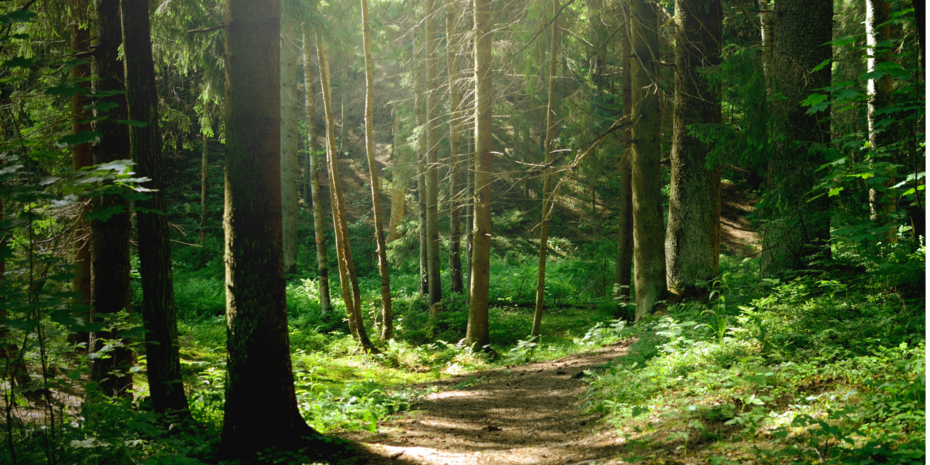
Restoration Practices Knowledge Base
Overview of restoration practices and database of different types of resources to support forest restoration practitioners across Europe. It compiles technical guidelines, textbooks and scientific articles and reviews that provide guidance on specific restoration practices.
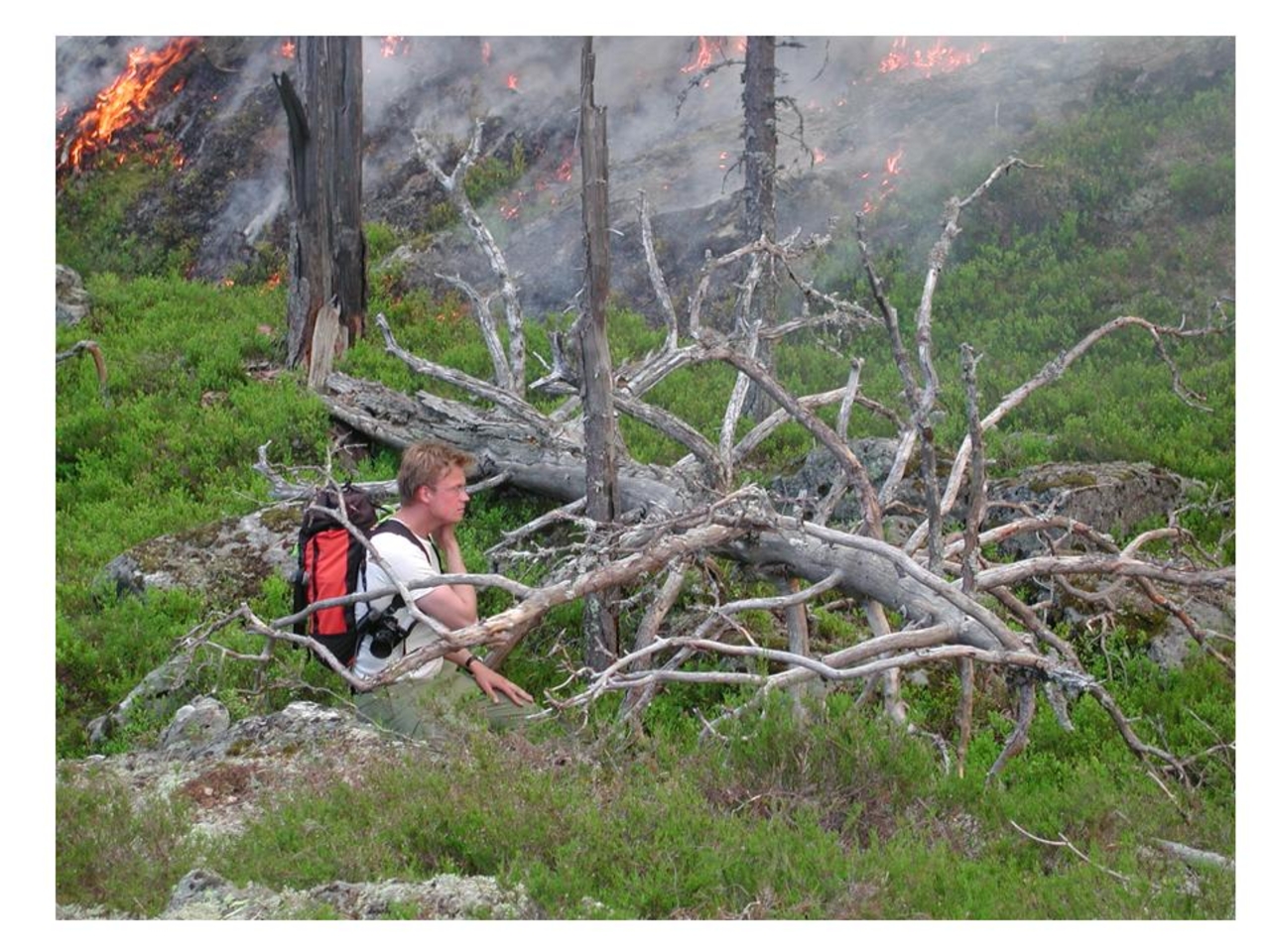
Forest fire in Sweden - a story of successful introduction of restoration
Fires may be seen as a threat to forests but they are also an integrated part, natural disturbance, in many forest ecosystems as they shape forest structure and provide important conditions for associated species. Due to more than 100 years of fire suppression in boreal Fennoscandia, fires are now implemented in boreal forests as an important restoration action.
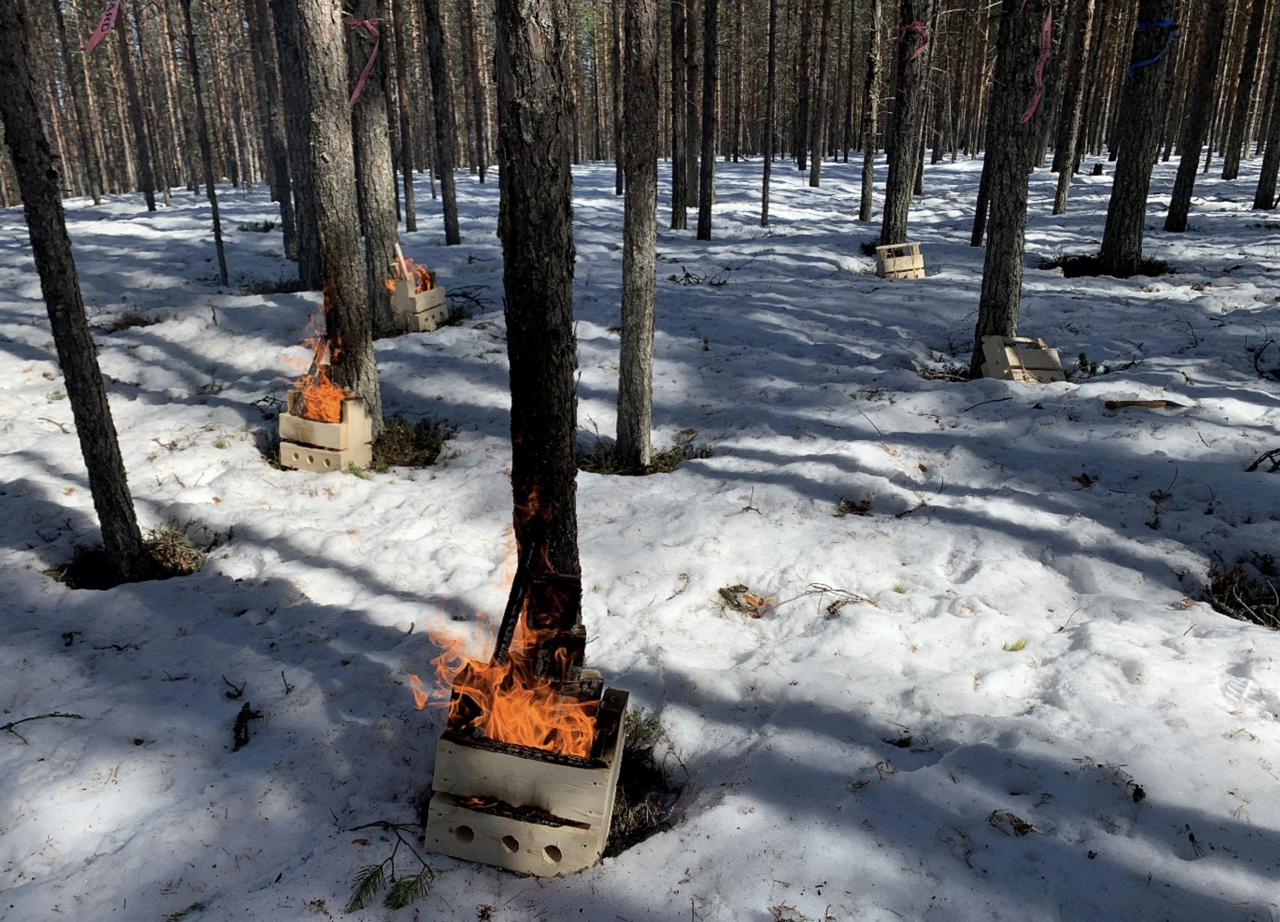
Fire mimicking measures
Fire is a natural disturbance in the boreal forest. Today, when wild forest fires are effectively supressed, many species that are dependent on burned forest are threatened. To improve the conditions for these species, conservation burnings might be used. However, conservation burning is not possible everywhere. Instead, fire mimicking measures are often adopted, with the aim of substituting some of the effects of a natural wild fire, such as the development of deadwood in general and in particular so called "Kelo"-trees, i.e. very hard and durable dead pine wood, sparse pine dominated stands or deciduous dominated stands.
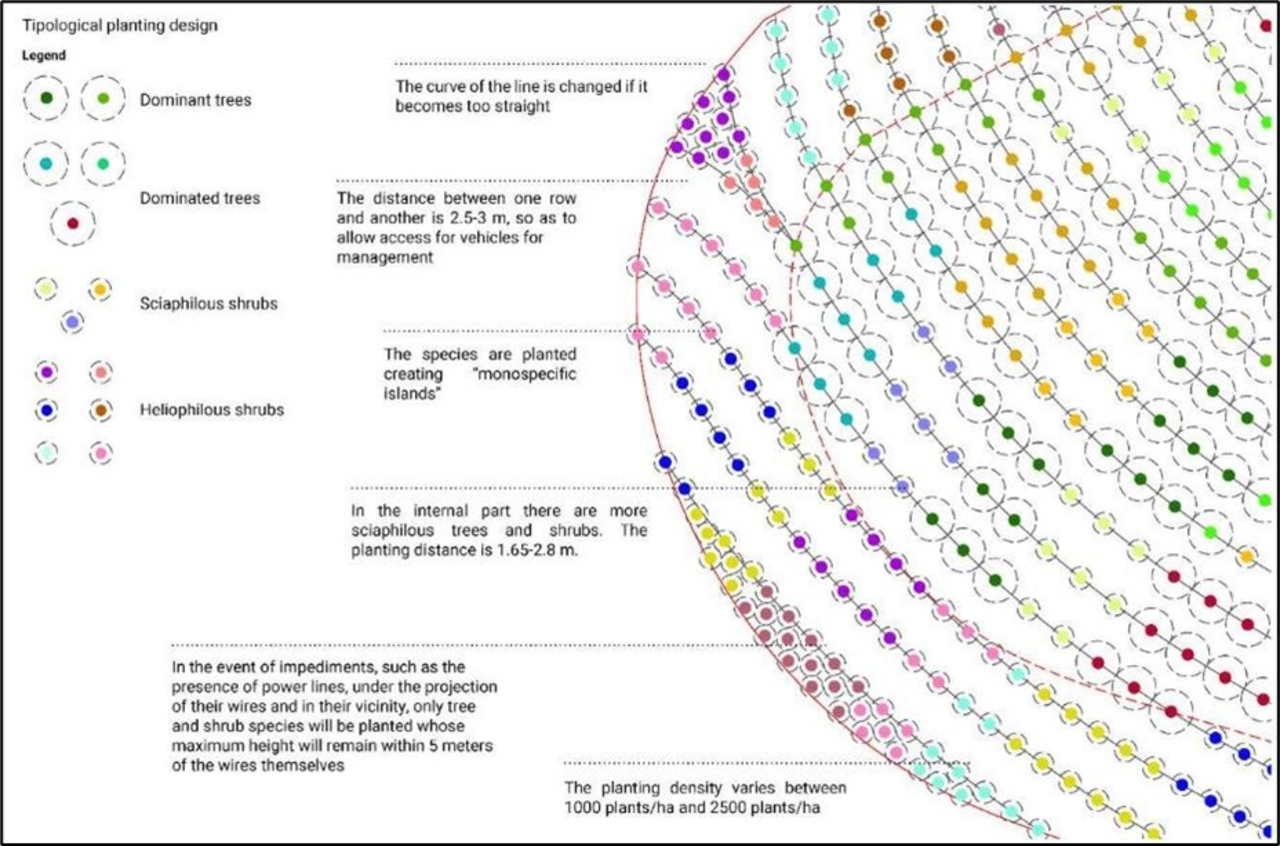
Planting in curved lines and orienting shrub facing south
In Urban Forests and general recreation forests, planting in straight lines bring to a “industrial plantation lines” panorama that doesn’t feel natural and hinder the nature contact experience of the users. A simple solution is to plant in curved lines with different species and shrubs clustered in groups: eventual mortality and growth rate differences will evolve the plot into a natural-looking forest