

Landowners / Practitioners
2. Practical Restoration Options/ Types

2.1 Afforestation and reforestation
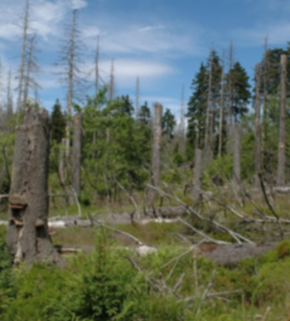
Afforestation and reforestation are essential practices for restoring forest cover and improving landscape resilience. For landowners, these actions determine the future character and value of their land, while for practitioners, they are critical to the overall success of their projects. A key step in planning is the careful selection of tree species and seed sources (provenances). These decisions should be guided by clear objectives and take into account future climate conditions that may affect species performance over the long term. Because trees are long-lived, species well adapted to current conditions may become less suitable as the climate changes. Tools such as Seed4Forest can support decision-making by identifying species and seed sources better suited to future climates. Thoughtful planning and informed choices help ensure forests that are healthy, productive, and resilient in the decades to come.
2.2 Natural regeneration and browsing control
Most forests can recover on their own after disturbances through natural regeneration, where new trees grow from seeds or sprouts. This approach reduces costs for landowners and helps practitioners see which species and provenances thrive under current conditions. Challenges like deer browsing require monitoring and protection of deer populations and their impacts to ensure successful growth. When guided carefully, natural regeneration offers a cost-effective, adaptive, and climate-resilient way to restore forests, supporting ecological health, economic goals, and societal needs.
2.3 Enhancing structural diversity
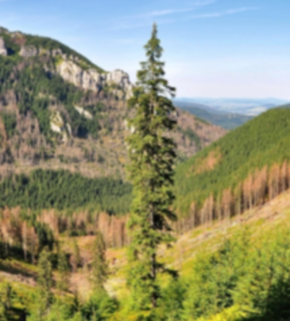
Many European forests are uniform, with trees of similar age and size and little deadwood. While productive, these forests provide limited habitats for wildlife, are less resilient to storms or pests, and are less attractive for visitors. Increasing structural diversity by adding a mix of tree species, ages, sizes, and canopy layers improves biodiversity, forest resilience, and the experience for people. In new forests, this can be done through mixed-species planting and irregular planting patterns. In existing stands, retaining old trees, creating canopy gaps, leaving or creating deadwood, and supporting natural regeneration gradually create richer, more resilient forests that support wildlife and are more enjoyable for visitors.
2.4 Deadwood, Veteranisation
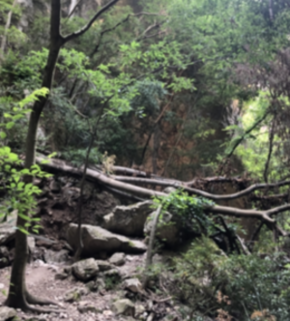
Thousands of forest species are dependent on dead wood and with very specific demands on the type of wood. Supporting this species rich community requires not only providing a given volume of dead wood, but also to consider a range of quality aspects. Dead wood is formed through natural mortality and leaving whatever is present in a stand is a first step to ensure resources for some species. However, to provide a wider range of dead trees and special deadwood, active measures may also be needed. This can include to veteranize individual trees as well as supporting younger forest stands with structures that result in conditions typical for biologically older forests.
2.5 Habitat trees
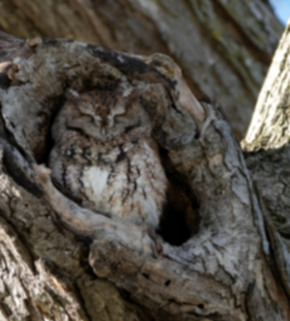
Habitat trees are either living or dead standing trees that bear ecological niches, so called tree-related microhabitats. Such trees can offer essential substrates or dwelling sites for many species during at least a part of their life cycle to develop, feed, shelter or breed. Habitat trees are a typical element of old-growth forests. They are usually rare or missing in managed forests.
2.6 Enhancing soil health
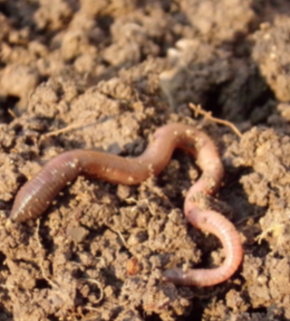
Soil health is the ability of soil to function as a living ecosystem that supports plants, animals, and humans. Healthy soils promote nutrient cycling, regulate water, store carbon, and sustain biodiversity, making them essential for resilient ecosystems and sustainable land use. In contrast, degraded soils lose fertility, store less carbon, and become more vulnerable to erosion, posing risks to both the environment and human well-being. Because forest and soil degradation are closely connected, effective restoration requires coordinated efforts that address both, soil and forest, simultaneously.
2.7 Risk mitigation
Managing risks is key to successful forest restoration. If future threats are not considered, even well-planned projects can fail to provide long-term benefits. As climate change increases the frequency and severity of forest disturbances, it is more important than ever to take a broad and proactive approach to managing these risks. This means planning restoration in a way that strengthens forests and helps prevent damage before it happens. One effective approach is replacing single-species forests with mixed forests. Forests with a variety of tree species are better able to cope with events like storms and pest outbreaks, because different trees respond differently to stress. This diversity reduces the chance of widespread forest damage.