


Funders / Investors
-

Marco, ESG lead for large company
“My company is developing its approach to natural capital assets and has asked me to explore the potential for the development of a £50m portfolio. I’m interested in how we can use our own resources to improve our environmental bottom line.”
-

Jenny, family office investment manager
“My clients are looking at diversifying their portfolio into more sustainable assets, offering longer term returns and benefiting their country’s environment. They have heard a lot about green finance and natural capital, but they are nervous about ‘greenwashing’.”
Are you a finance professional seeking more information on opportunities in forest restoration in Europe? Whether you work with companies, funds, high net worth individuals, philanthropy, pensions or insurance, you’re in the right place. Explore our example user profiles to get a better idea of whom this page is meant for and uncover key enablers and barriers for financing forest restoration that are especially relevant for your work.
Introduction
The work needed to restore and adapt ecosystems and habitats has been mostly paid from public finance to date. Furthermore, many landowners have made an impressive effort in restoring, adapting and managing their forest in a multifunctional way with limited or no extra funding, and by investing their own time. However, given the scale of the restoration demand and thus of investment needed, while seeing many other pressures on public finances, the importance of encouraging and enabling greater private finance is increasingly understood. But numerous barriers and enablers of sustainable financing to scale up forest biodiversity restoration exist, which is revealed through data-driven analysis combined with real-world insights obtained from a wide range of stakeholders at many levels.
This Funders/Investors journey provides you with practical guidance on how to improve investment in forest restoration, ensuring effective and impactful financial strategies. As someone involved in sustainable finance, you can become a key enabler for improving the health, resilience and biodiversity of Europe’s forests on a large-scale. While you understand the complex landscape of markets and investment, we offer more insights into the risks and opportunities associated with improving forests’ ecological condition. You can also obtain a better understanding of the fundamental principles of restoration in order to determine value, as well as of the future potential and risks associated with specific restoration actions or different geographies.
1. Restoration Concepts and Approaches
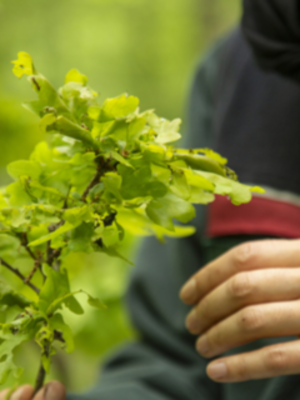
Curious about what “restoration” really means in practice? Read on to explore the concepts shaping how ecosystems are being brought back to life across Europe. Restoration refers to the process of actively or passively supporting the recovery of an ecosystem to improve its structure and functions, with the goal of conserving or enhancing biodiversity and ecosystem resilience. However, its meaning can vary between stakeholder groups: some emphasise processes, while others focus on outcomes. In policy contexts, establishing a shared understanding (or at least acknowledging differing perspectives) is essential before engaging in action. This section explores key concepts of restoration, the drivers behind it such as forest degradation, and the diverse approaches used across Europe to restore ecosystems effectively and at scale.

2. Policy and Legal Contexts
Interested in how policy and finance can work together to restore Europe’s forests? Financing forest restoration sits at the intersection of policy, law, governance, and investment. Emerging frameworks such as the Taskforce on Nature-related Financial Disclosures, the Nature Restoration Regulation, and evolving carbon credit systems are reshaping how capital flows into restoration projects. Policy can either unlock or restrict investment, making strong governance and clear regulatory signals essential. Understanding these legislative and voluntary drivers helps identify opportunities, reduce risks, and align financial strategies with impactful forest restoration outcomes across Europe.
3. The Opportunity - Nature-based Markets
Do you want to learn more about how nature markets can help finance ecosystem restoration and create positive environmental impact? Read on to discover the growing opportunities in carbon and biodiversity markets across Europe. Nature markets, including carbon and biodiversity markets, are emerging as powerful tools for funding ecosystem restoration. While regulated carbon markets are largely shaped by government policies, voluntary carbon and biodiversity markets are expanding as businesses increasingly invest in nature-positive solutions. These markets enable participation in large-scale forest restoration and conservation efforts, generating lasting ecological benefits. Explore how existing mechanisms attract private investment into nature conservation, uncover opportunities to scale impact across Europe, and gain practical insights for navigating biodiversity and carbon markets effectively.

4. Managing Risks
Concerned about greenwashing in forest restoration investments? Read on to learn how to spot credible, high-impact nature-based projects. Greenwashing remains a key risk in forest restoration finance, even as nature-based solutions offer benefits for carbon storage, biodiversity, and returns. Past issues in voluntary carbon markets have shown how overestimated impacts can occur, reinforcing the need for strong due diligence. Investors should focus on additionality, permanence, leakage prevention, and robust monitoring, reporting, and verification (MRV). Effective monitoring ensures projects deliver real, measurable ecological outcomes against clear baselines, helping distinguish high-quality restoration from weak claims and supporting more informed investment decisions.
5. Opportunities for Investors
Interested in how investors can identify high-integrity nature-based projects and avoid greenwashing risks? Read on to explore emerging opportunities in restoration finance. Nature-based investments are gaining momentum, but concerns about transparency and impact are reshaping how capital is allocated. Platforms like the SUPERB Marketplace help address these challenges by showcasing restoration projects with clear data on impact, financing, governance, and long-term outcomes, thus supporting better, more informed investment decisions.