

Combined retention of large living and dead trees can improve provision of tree-related microhabitats in Central European montane forests

The influence of different retention approaches of selecting ten potential habitat trees on mean abundance (left) and richness (right) of TreMs per one-ha plot: Combined (five living/five dead trees)
Retention forestry can promote biodiversity conservation in managed temperate European forests. Often, living trees are retained for their tree‑related microhabitats (TreMs) such as cavities or deadwood, crucial resources for forest-dwelling species. Climate‑driven disturbances are raising mortality rates, threatening the long‑term supply of TreMs.
To understand long-term effects of retention, we compared TreM occurrence on living and dead habitat trees in 133 one‑hectare plots in the Black Forest, SW Germany.
We fitted generalized linear mixed models to identify what drives TreM abundance and richness. Dead Abies alba displayed the highest TreM abundance and richness. Although dead A. alba and Picea abies supported numbers of TreMs comparable to large living decidous trees, their TreM composition differed markedly, indicating that dead trees complement rather than replace living trees. Consequently, large trees of diverse species, vitality status and decay class together increase plot‑level TreM richness, but one cannot substitute another.
Management therefore needs to retain a heterogeneous set of habitat trees, balancing the conservation of large living trees with sufficient quantities of high‑quality standing deadwood, to preserve functional diversity and unique TreMs as disturbance frequencies rise.
The research was carried out in the Research Training Group ConFoBi (Conservation of Forest Biodiversity in Multiple-Use Landscapes of Central Europe) / https://confobi.uni-freiburg.de/en/about in the context of temperate European forests managed under a close-to-nature forest management approach.
Information adapted for practitioners (DE/EN) is available here: https://www.waldwissen.net/en/forest-ecology/nature-conservation/species-protection/tree-related-habitat-importance-for-retention-forestry
Media
-
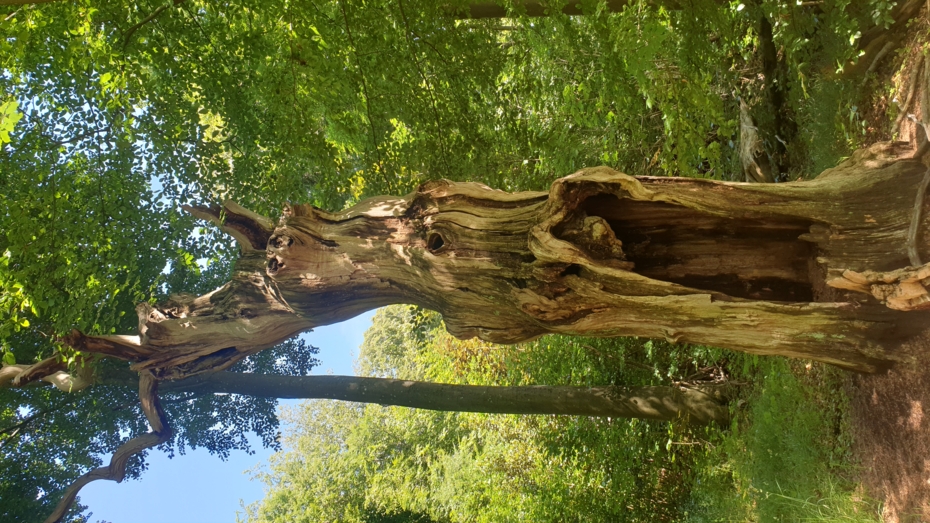
Dead Pinus sylvestris habitat tree. @A. Spinu -
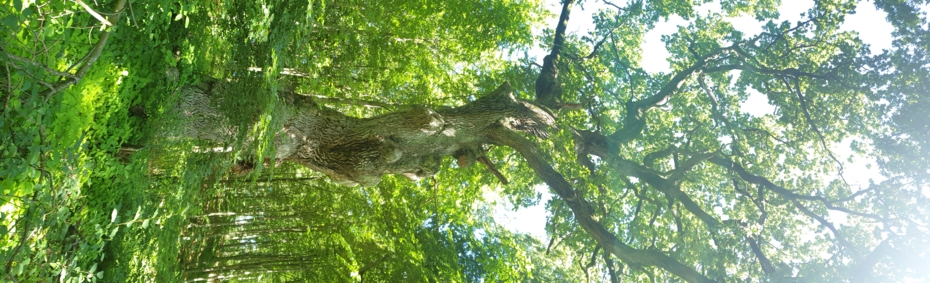
Living Quercus robur habitat tree. @A. Spinu
- Implementation
- Integrative Forest Management
- Landowners & Practitioners
- Planners & Implementers
- Natural processes and ecosystem preservation
- Restoration after direct human impact
- Specific habitats (deadwood, microhabitats, habitat types,...)
- Structural diversity
- Show 1 more
- Continental
- Germany
- 2022