

Improving nursery planning and production

Nursery production.
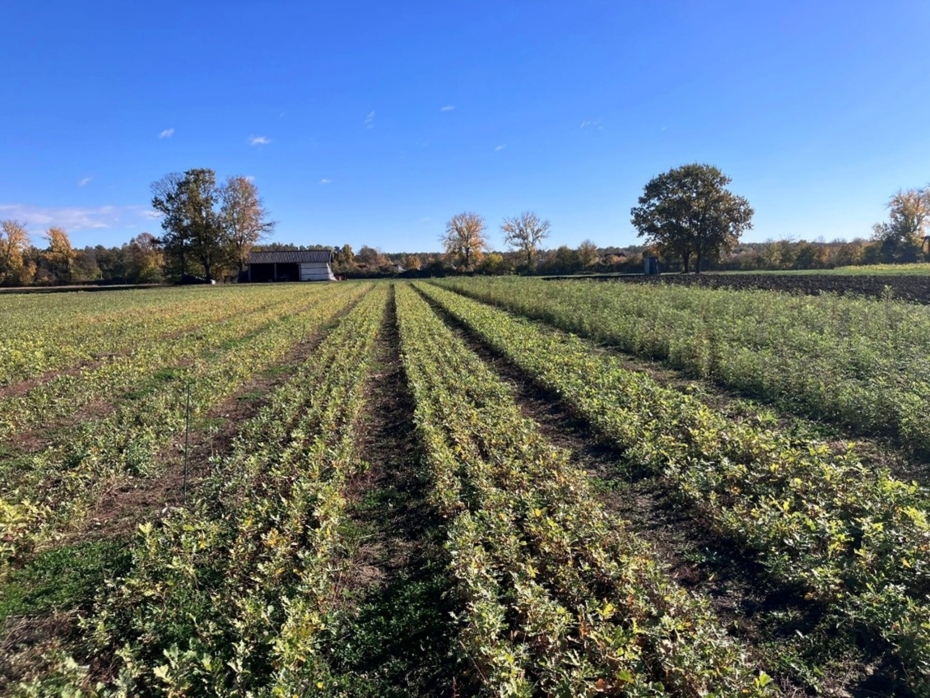
Improving nursery planning and production in Croatia and Serbia strengthens the site alignment between seedling supply and forest management plans, ecological conditions, and restoration needs. The practice includes habitat-based planning—particularly for sandy soils—and focuses on producing 2+0 container seedlings without root pruning, and planting them in sandy soil substrates. Root pruning is selectively applied depending on soil type and species requirements. Enhanced coordination of seedling demand, improved seed provenance tracking, and the use of climate-adapted species suited to specific site types and soils contribute to better ecological matching. Investments in production processes, monitoring, research, and staff training support the delivery of healthier, site-adapted seedlings. Official controls ensure traceability and quality, with oversight from expert bodies, while health inspections and project-based recommendations help reduce biological risks. Ideal seedling characteristics depend on species and site conditions—particularly soil type—ensuring improved adaptation and restoration success.
Context:
The implementation of the practice in Croatia and Serbia is shaped by diverse ecological, socio-economic, and cultural factors. Ecologically, both countries encompass a range of biogeographic regions with varied site conditions. These conditions require tailored approaches to seedling production, including the use of climate-adapted species and site-specific planning based on forest management strategies. Socioeconomically, forestry plays a vital role in rural development, employment, and ecosystem services. Nurseries are often state-managed or regionally coordinated, and their efficiency directly impacts the success of afforestation and reforestation programs. Investments in production processes, monitoring, and staff training are essential to meet growing demands for resilient planting material. Culturally, forestry in both countries is deeply rooted in tradition and public interest, with strong institutional frameworks and expert bodies overseeing quality control, traceability, and health inspections. Cross-border collaboration between Croatian and Serbian forestry institutions reflects a shared commitment to sustainable forest management and ecological restoration. The practice also responds to increasing awareness of biological risks and the need for adaptive strategies in the face of climate change, making it both locally relevant and regionally scalable.
Problem Description:
This practice addresses the mismatch between nursery production and ecological restoration needs in Croatia and Serbia. Seedling supply has often overlooked site-specific conditions, leading to poor adaptation and increased biological risks. Key degradation drivers include soil erosion, habitat loss, and climate change, alongside economic inefficiencies and limited institutional coordination, and knowledge.
Implementation Steps:
• Align nursery planning with forest management plans
• Assess site conditions and select suitable species based on soil, climate, and ecological requirements.
• Forecast seedling demand and adjust production schedules to match planting seasons.
• Prepare nursery infrastructure and sowing beds to support seedling cultivation.
• Monitor growth and apply root pruning selectively to improve transplant success.
• Prioritize container seedlings (2+0 stock) for late‑successional tree species, as they generally achieve higher survival rates and offer more flexible planting periods compared to field‑cultivated seedlings.
• 2+0 seedlings of climatogenous tree species (e.g., oaks) are commonly used in reforestation, whereas 1+0 seedlings are preferred for pioneer species due to their faster initial growth and quicker site adaptation.
• Implement quality control and traceability measures
• Train staff and integrate expert oversight
Stakeholder Engagement:
Improving nursery planning and production involves close collaboration among forestry experts, nursery managers, and local communities. These stakeholders help design the practice, carry out nursery activities, and benefit from better planting outcomes.
Knowledge Types:
The practice combines scientific, practical, and local knowledge to improve nursery planning and production. Scientific insights guide species selection, seedling physiology, and shape nursery production processes. Practical experience from the nursery workforce informs infrastructure setup, sowing, root management, and responses to challenges. Local and, where relevant, traditional knowledge supports site-specific decisions, particularly in species selection and adaptation to soil conditions. This integration ensures the practice remains relevant and effective in restoration efforts.
Replicability:
YES, the practice has been tested and replicated in multiple contexts and scales and therefore, can be easily transferred and/or adapted to other initiatives with similar goals.This practice has already been tested and replicated across multiple contexts and scales, involving research institutions, forest experts, managers, and practitioners in state enterprises. Its gradual refinement through nursery production adjustments, long term monitoring, and annual follow up ensures adaptability. As a result, the practice can be easily transferred and adapted to other initiatives with similar restoration goals. Annual follow up through research, expert evaluation, and official controls will continue, with results expected to inform future improvements.
Key Success Factors:
• Stakeholder collaboration and knowledge exchange: involvement of public forestry enterprises, nurseries, and research institutes
• Economic suitability and site-specific planning: improved planting material
• Long-term monitoring and institutional support: gradual changes in nursery production processes, and annual reports
Common Constraints:
• Lack of standardized guidelines for site-specific planning: nurseries often lack clear protocols for adapting forest reproductive material and seedling production to specific ecological conditions.
• Slow institutional change: nursery production systems are typically rigid and slow to adapt due to established routines and limited flexibility.
• Awareness and engagement among practitioners: awareness and familiarity with practices remain limited among nursery staff and field practitioners.
Lessons Learnt:
• Change takes time and long-term commitment: nursery improvements require ongoing monitoring, support, and gradual adaptation beyond short-term projects.
• Collaboration matters: involving forest experts, managers, and practitioners early improves relevance and adoption.
• Local conditions are key: tailoring seedling production to site-specific needs boosts restoration success.
Positive Impacts:
- Improved societal support
- Improved tree species regeneration
- Increased climate change mitigation
- Increased share of forests dominated by native species
- Increased soil health
Positive impacts were assessed through expert reviews, field observations, and feedback from nursery managers and forest practitioners. Results are monitored annually, and lessons learned are shared among stakeholders to improve future nursery planning and seedling production. The process is ongoing and supports long-term improvements.
Negative Impacts:
- Reduced timber quality or quantity
The main negative impact is a temporary reduction in timber quantity and growth rates due to increased felling and the use of 2+0 container seedlings, which grow more slowly at first but are more valuable and better adapted to climate and site conditions in the long term. This trade-off is expected to balance out over time. Institutional rigidity may also slow broader adoption, but this is being addressed through ongoing monitoring, expert support, and stakeholder collaboration.
Media
- Implementation
- Planning & Upscaling
- Croatia
- Serbia
- Environmental
- 81,5