

Old-growth forests of Slovakia
A hot spot of diversity and complexity

Great Fatra National Park; (c) Elisabeth Schatzdorfer
A SUPERB study tour brought researchers from EFI and the Czech University of Life Sciences to Slovakia to visit old-growth forests and discuss their role in forest resilience and restoration. The group explored several protected forest areas shaped by natural disturbances and observed how these processes create diverse and resilient forest structures. Discussions focused on the opportunities and limits of restoring old-growth forests, current risks such as browsing pressure, and what lessons these forests offer for closer-to-nature forest management. The tour highlighted the importance of long-term monitoring, scientific knowledge, and protecting remaining old-growth forests, which provide unique biodiversity and ecosystem benefits that are difficult to replace once lost.
SUPERB study tour, September 2022: Several members from the Department of Forest Ecology from the Faculty of Forestry and Wood Sciences at the Czech University of Life Sciences in Prague (CULS), amongst others SUPERB member Martin Mikoláš hosted a field trip to Slovakia for the members of EFI’s Resilience programme and SUPERB coordinator to visit local old-growth forests, and discuss opportunities, risks and limitations of restoring old-growth forests. The group from EFI included Elisabeth Pötzelsberger, Marcus Lindner, Trishna Dutta, Lyla O’Brien along with two PhD students from the project RESONATE.
Old-growth forests and natural disturbances
Old-growth forests are hot spots of forest diversity providing essential habitat for many species also allowing for a range of other ecosystem functions. These precious forests are driven by natural disturbances that play a key role in forests’ spatial and temporal dynamics. The old-growth forests of central Europe, that are excluded from any forest management, are driven by natural disturbances of mixed severity creating a great diversity in tree ages and sizes along with a wide range of spatial patterns. Significant biological legacies contributing towards precious complexity of old-growth forests such as large live trees, habitat trees, microhabitats, deadwood in different stages of decay and of different forms, multi-layered canopies, etc. are commonly occurring features in old-growth forests.
Field trip
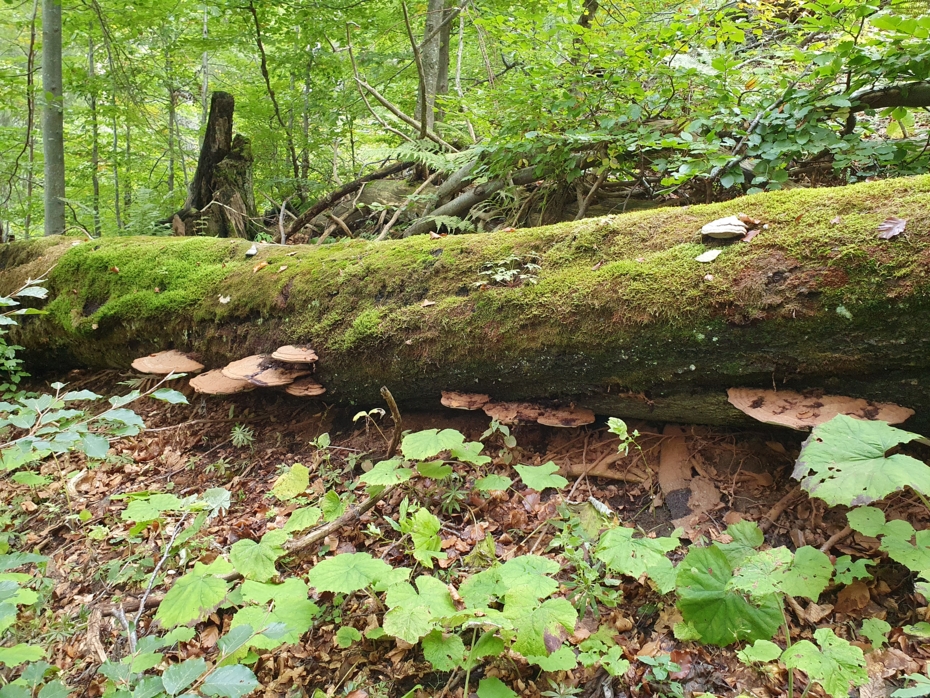
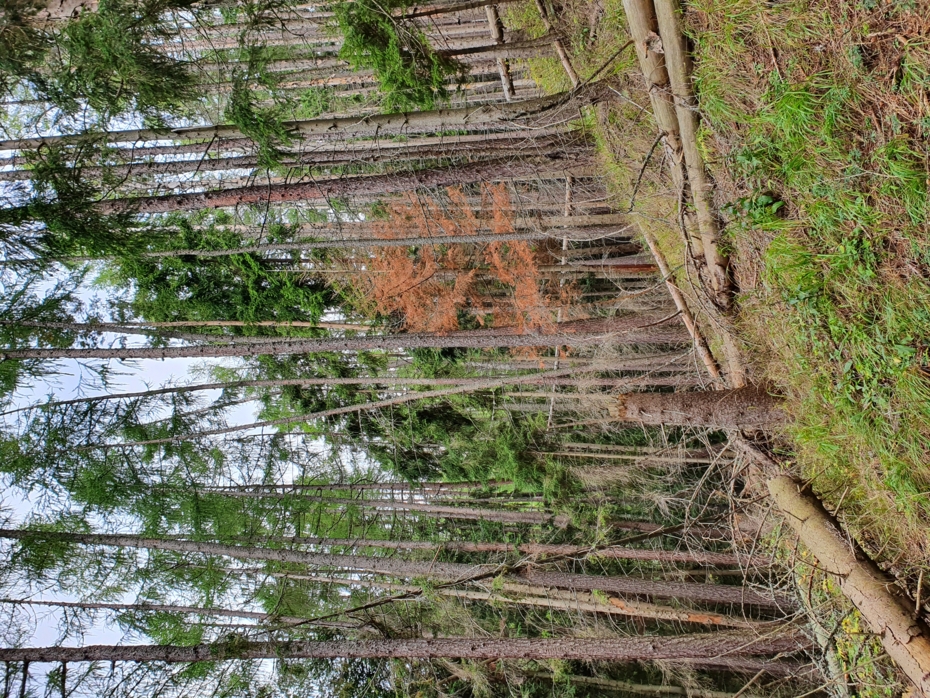
The group visited the oldest Pinus cembra old-growth forest in the Carpathians located in Ticha and Koprova valley in the Tatra National Park, Slovakia, on the first day of the field trip. This place with stunning landscape views forms an extensive wilderness area that is home to brown bears, wolves, lynxes, three-towed woodpeckers, amongst other iconic species. The forests located on steep slopes are home to some of the oldest P. cembra trees in the Carpathians. The second day of the field trip took place in Great Fatra National Park – the mountain range with the largest proportion of primary forests in Slovakia. A mixed species old-growth forest dominated by European beech was visited. The presence of important biological legacies such as large segments of lying deadwood, tall snags, a wide range of microhabitats and fruiting fungi was just amazing to watch. The diversity in tree sizes and ages and the heterogeneity in their spatial pattern created by mixed severity disturbances was ubiquitous. The last day of the field trip led the group to Jalovecka and Bobrovecka valley that is the last roadless mountain valley in central Europe. A transition from former Norway spruce commercial forests towards secondary old-growth mixed fir-beech-spruce forests following unmanaged natural disturbances in a form of windthrows and beetle outbreaks was observed. These areas comprise of post-disturbance stages demonstrating the rich heterogeneity created by the natural disturbance events. A particularly debated topic was the impact of ungulate browsing on these forests, and the role of hunting vs. carnivors.
The project REMOTE monitoring the last remnants of old-growth forests in Europe
The old-growth forests visited during the field trip are also permanently monitored as a part of the project REMOTE (REsearch on MOuntain Temperate; www.remoteforests.org) - a long-term international collaboration based on a network of permanent research plots regularly inventoried by the Department of Forest Ecology at CULS. The project REMOTE has yielded one of the largest dendroecological databases in the world including thousands of individual trees providing basis for analyses focusing on various aspects of natural disturbance regimes that drive the dynamics of extremely diverse and precious old-growth forests. Extensive data on forest structure and long-term dynamics of individual trees are collected as a part of the project along with dendroecological analyses focusing on the past tree growth based on tree rings from individual trees across tree, stand, and landscape levels. In general, the aim of the project REMOTE is to conduct spatial and temporal analyses focusing on various aspects of disturbance regimes in the old-growth forests of Europe as well as to perform dendrochronological studies. The project raises awareness regarding the importance of old-growth forests and the many ecosystem services they provide and thus deliver science-based information and guidance on forest management for the key stakeholders, forest managers, and conservationists. The science-based information from the old-growth forests is to help guide the application of ‘closer-to-nature’ forest management principles in suitable commercial forests. In addition, the project is to ensure that natural disturbance regimes commonly occurring in old-growth forests are considered as a template for ‘closer-to-nature’ forest management in selected commercial forests.
Concluding remarks
The Department of Forest Ecology (CULS) in Prague was happy to organise the field trip and share the knowledge on the precious old-growth forests and the heterogeneity driven by the mixed severity disturbances. Since the goal of the Department of Forest Ecology is to contribute to the long-term scientific understanding of the remaining old-growth forests in Europe by means of continuous and regular monitoring of the permanent plots in REMOTE project, and to provide scientific evidence and guidance for SUPBER’s Romanian demonstration area focusing on Norway Spruce conversion and old-growth forest establishment, we also wish to contribute to the protection of the remaining and threatened primary forests. Once these primary forests are lost, the heterogeneity and diversity of these valuable biodiversity hot spots take a very long time to retrieve.
Media
-
-
-
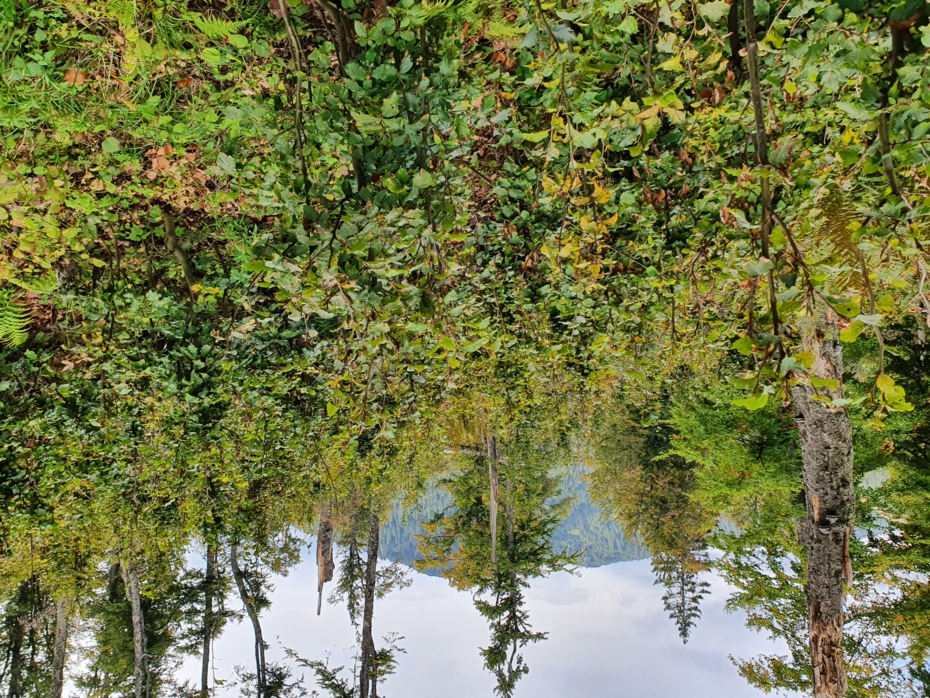
Heavy browsing impact on beech regeneration, (c) Elisabeth Schatzdorfer -
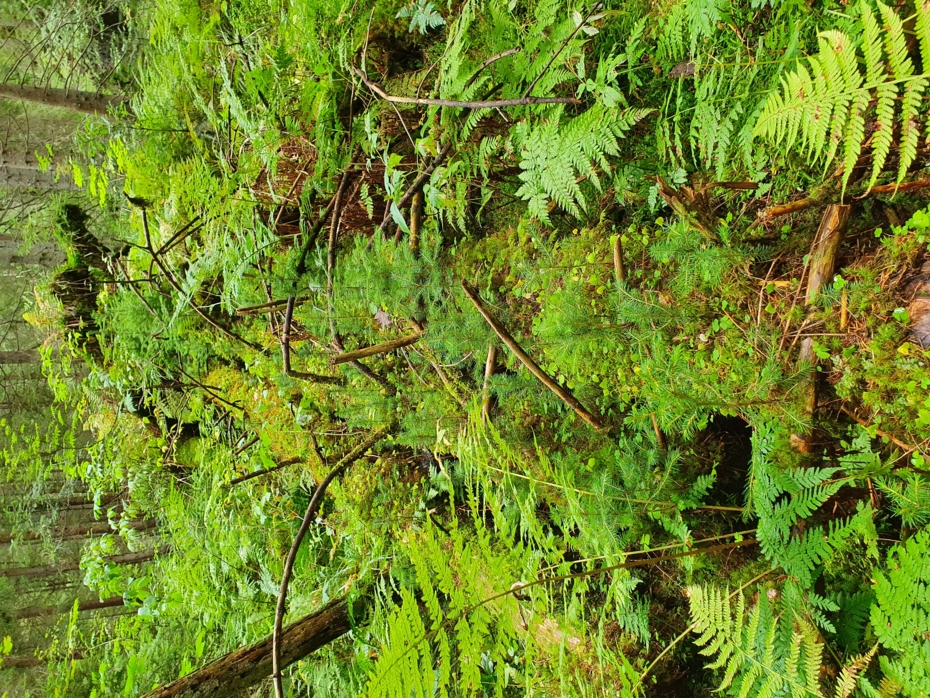
Tree regeneration on lying deadwood, (c) Elisabeth Schatzdorfer -
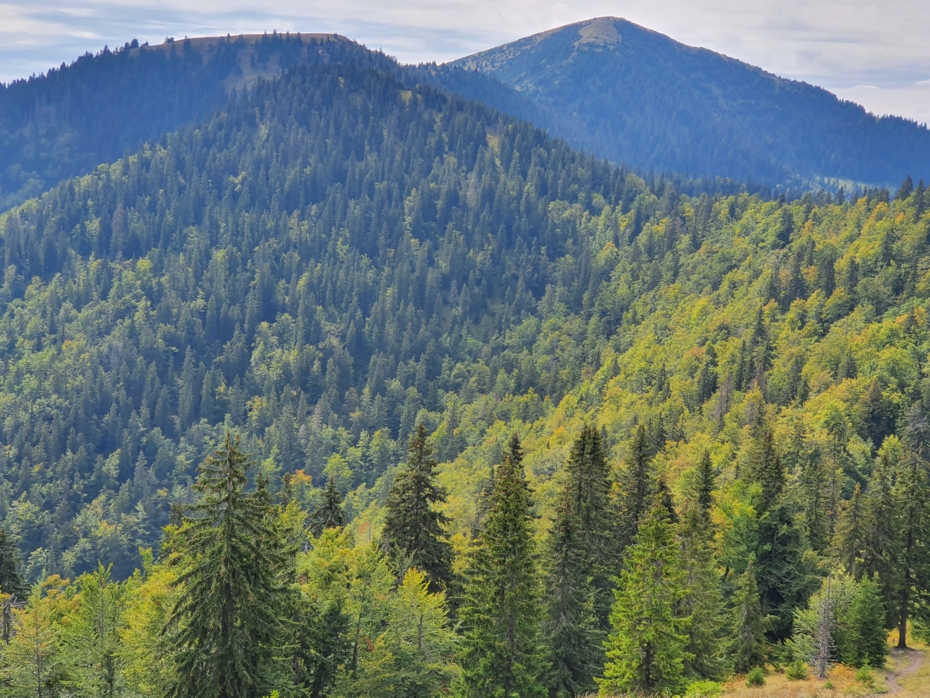
Primary forest, (c) Elisabeth Schatzdorfer -
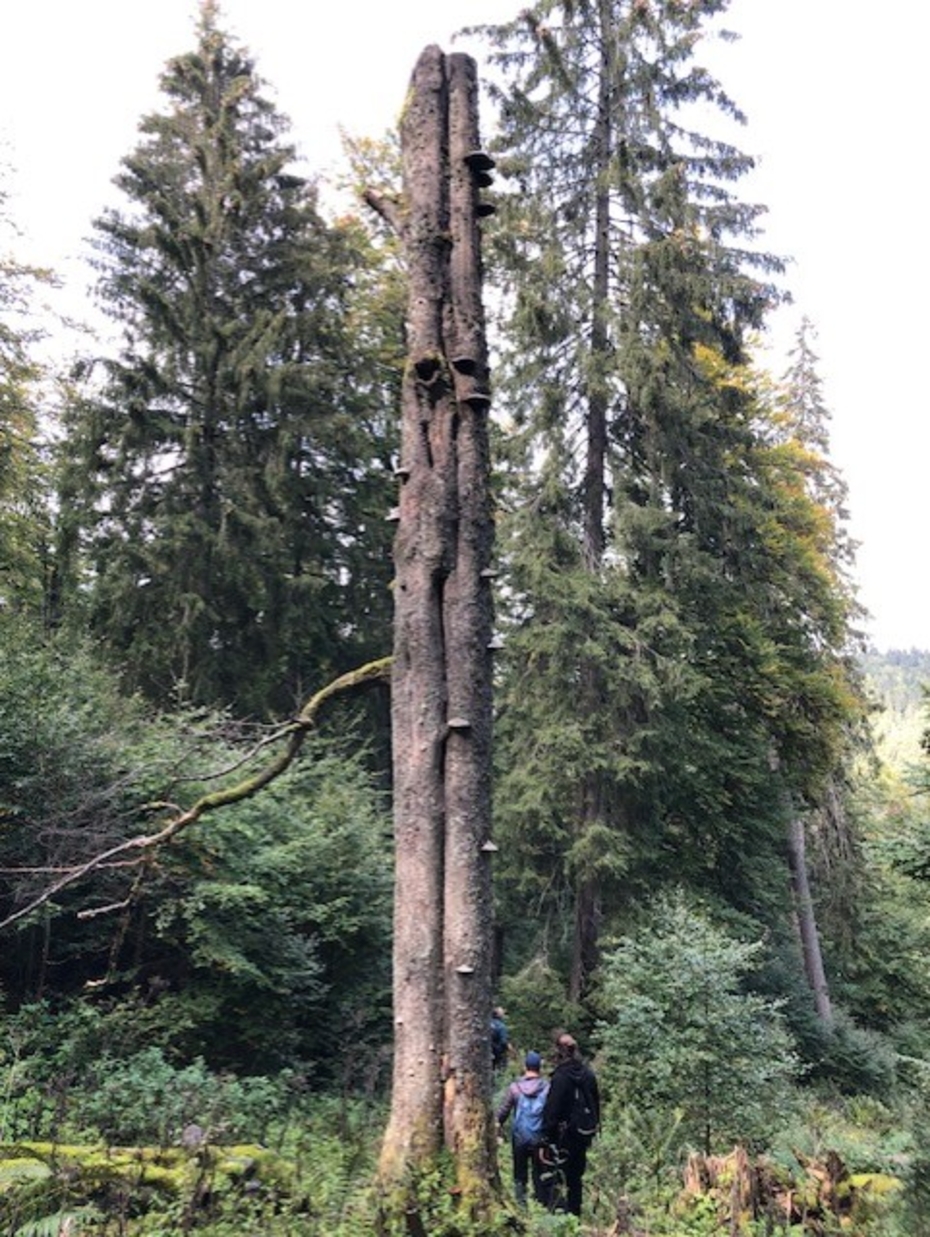
(c) Lyla O'Brien
- Monitoring & Projecting
- Passive Forest Restoration
- Continental
- Slovakia