

Plantation maintenance in dry regions
Include plantation after-care in the workplan and budget

Watering a field plantation in the Spanish demo of El Bierzo
In dry regions (such as the El Bierzo Spanish demo site), where restoration involves both enrichment plantings and the promotion of traditional chestnut agroforestry systems, successful plant establishment is critically dependent on appropriate watering protocols.
Due to the prevalent summer drought, providing supplementary irrigation during dry periods is considered a mandatory good practice throughout the first year after planting.
This essential maintenance must be thoroughly incorporated into the project’s Work Plan, securing the necessary budget allocation to ensure its effective and consistent execution. Failing to account for this step significantly increases the risk of plant mortality and project failure.
Context:
In regions characterized by warm dry summers (such as the El Bierzo Spanish demo site), the successful establishment of new plantations is highly dependent on appropriate water management. The provision of supplementary irrigation during dry periods is crucial to ensure the survival and vigour of the plants once transferred to the field, especially throughout the first year after planting. This step mitigates the high mortality risk associated with water scarcity during the growing season.
Problem Description:
A common shortcoming identified in previous forest restoration projects carried out in the area was the lack of post-implementation monitoring and management. As a result, planted seedlings often struggled to survive their first summer due to insufficient rainfall during the initial growth stages. This problem was mainly caused by the absence of watering measures in the implementation plans, which failed to account for the region’s recurrent summer droughts.
Implementation Steps:
Therefore, the work plan includes several watering operations during the summer period. Local machinery and operators are involved in these activities to support the process and to strengthen the long-term impact on the community after the restoration works are completed.
Some tips for a successful establishment of tree plants in areas with warm, dry
summers:
- Include the cost for necessary post-planting irrigation already when you apply for funding for your restoration project
- Plan your post-planting maintenance protocol based on the local conditions but also on projected new conditions due to the changing climate. It might also be a good idea to consult the locals already in the planning stage, since they might have local experience of successful planting of trees in the area.
- Put up a clear and easy-to-follow protocol for irrigation. This is especially important if you plan to engage locals or other external people for the aftercare of the plants.
- Ensuring that watering is carried out before the hours of highest fire risk — usually before 12 p.m. — helps avoid interference with firefighters’ peak activity hours, in case the equipment used is shared with local fire brigades.
- Involve local operators and machinery in the plantation after-care to strengthen the sense of local ownership and the long-term impact on the community after the restoration works are completed.
Replicability:
YES, the practice has been tested and replicated in multiple contexts and scales and therefore, can be easily transferred and/or adapted to other initiatives with similar goals.Future opportunities for replication will rely on ensuring adequate funding through integration into the restoration plan.
Key Success Factors:
Funders, to understand the "natural " calendar of proper restoration considering account climate and seasonal needs of the restored area.
Common Constraints:
Circumstance as work limitation with heavy machinery by wildfire or drought alert can be a constrained and planning ahead is key to not carrying out the water support very late.
Positive Impacts:
- Improved societal support
- Reduced drought impacts
- Reduced fire risk
Positive impacts can be easily evaluated from a scientific, technical and methodological point of view visiting field plantations and assessing the survival and vigour of the planted seedlings.
Ensuring that watering is carried out before the hours of highest fire risk — usually before 12 p.m. — helps avoid interference with firefighters’ peak activity hours, in case the equipment used is shared with local fire brigades.
Negative Impacts:
- Reduced societal support
Reduced societal support may arise if there is not a longterm survival of the planted seedlings.
Watering needs coincide with the period of highest fire risk; therefore, the equipment required for plant maintenance should, as far as possible, be independent from that used by local firefighting services.
Media
-
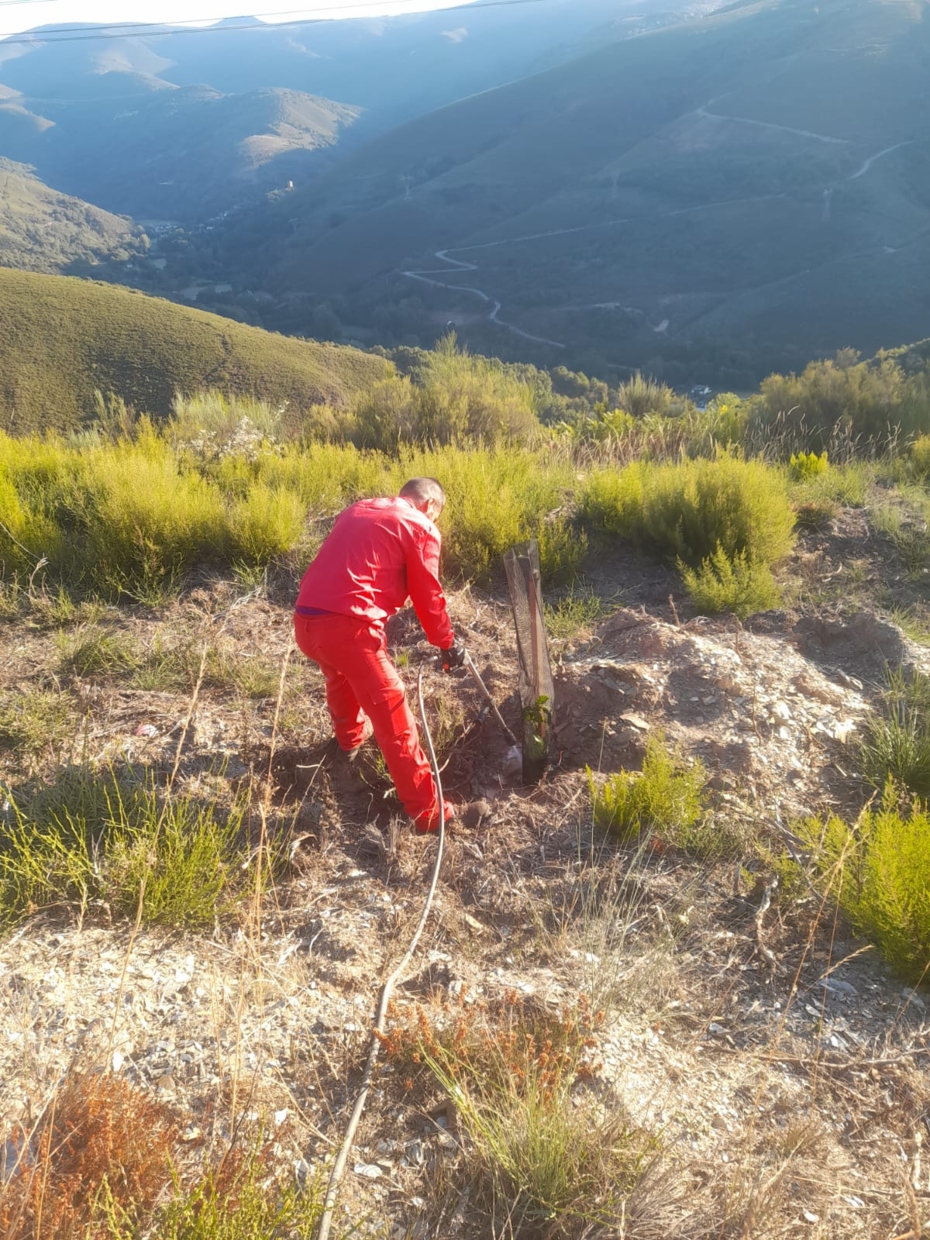
Watering a field plantation in the Spanish demo of El Bierzo
- Active Restoration
- Integrative Forest Management
- Social & Stakeholder
- Funders & Investors
- Landowners & Practitioners
- Planners & Implementers
- Afforestation, reforestation
- Climate change mitigation
- Risk mitigation and disturbance prevention
- Continental
- Mediterranean
- Croatia
- Greece
- Italy
- Spain
- Show 1 more
- Environmental
- 37.4 ha