


Policy Actors
1.1 What is forest restoration

Restoration is the process of actively or passively assisting the recovery of an ecosystem and improve its structure and functions, with the aim of conserving or enhancing biodiversity, ecosystem resilience and the provision of ecosystem services. It involves a wide range of strategies – from natural regeneration and enrichment planting to structural diversification and soil rehabilitation – tailored to local conditions and societal needs.
Importantly, forest restoration does not always mean strict protection or the cessation of forest use. Many restoration measures can be implemented within actively managed forests that provide multiple ecosystem services, including timber and biomass production. Restoration can enhance biodiversity, climate change adaptation, and ecosystem resilience even in multifunctional landscapes.
Forest restoration is not a one-size-fits-all solution. It must be context-specific, balancing ecological goals with social and economic realities. Rather than being revolutionary, restoration is often transformative – seeking to improve forest conditions over time without undermining the livelihoods of those who depend on forest management.
Because ecosystems and societal needs evolve, restoration must be approached as a dynamic and iterative process. It requires continuous learning, monitoring, and adaptation – integrating ecological science with local knowledge and stakeholder engagement – to ensure long-term success and relevance across diverse forest types and management contexts.
Related resources
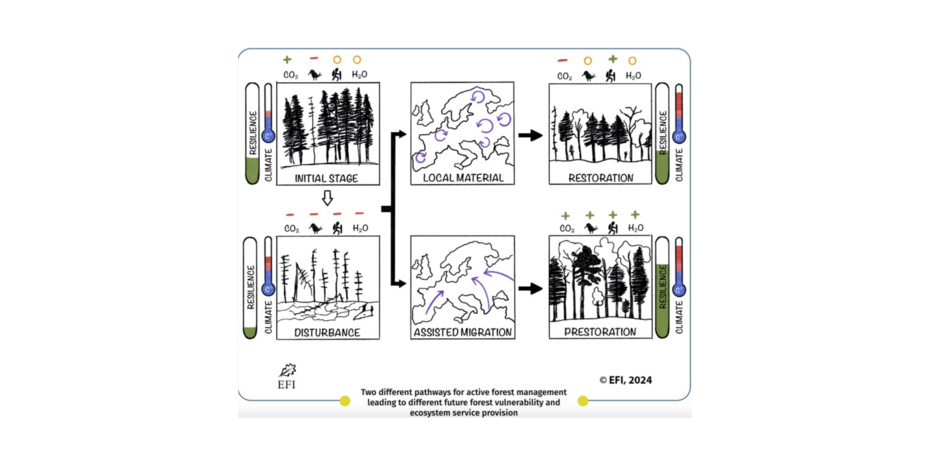
How to strengthen the European forest carbon sink through prestoration: integrating active restoration and adaptation
Active forest restoration combined with assisted Active forest restoration combined with assisted migration (prestoration), i.e. using always the climatically most suitable European tree species and populations, has the long-term potential to enhance carbon sequestration significantly compared to restoration efforts without assisted migration.
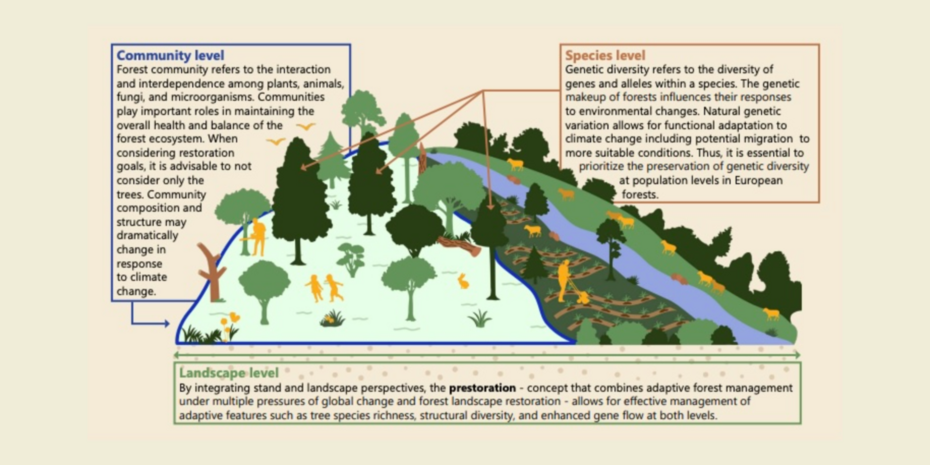
SUPERB’s Policy recommendations for the EU Nature restoration Law
SUPERB aims at large scale forest restoration in Europe, combining scientific and practical knowledge to drive actionable outcomes. This policy brief is based on the concepts underpinning this approach and provides four recommendations for changes to the proposed EU Nature Restoration law.