

Practical Knowledge Base
2.4 Retention forestry

Retention forestry experiment in Schwarzwald, Germany © Hernán Serrano-León
Retention forestry is a silvicultural approach that preserves specific structural elements of forests, such as living and dead trees, during harvesting operations to maintain ecological functions and biodiversity. By retaining these elements, the method supports a continuous habitat for various species, enhances structural diversity, and facilitates ecosystem processes similar to those in natural forests. This practice is applicable across different forest biomes and complements conservation efforts while considering timber production.
Retention forestry is a key practice within Integrative Forest Management (IFM). Common retention elements include so-called “habitat trees”, high stumps, deadwood, and patches of intact forest, which provide habitats for forest-dwelling species such as cavity-nesting birds, deadwood-dependent insects, and lichens.
However, retention forestry may not effectively conserve all forest species, particularly those depending on closed old-growth forests (including very rare and red-listed species). Therefore, retention forestry should be combined with other IFM strategies, such as protecting sensitive and rare habitats and establishing patches of intentionally unmanaged forest.
In relation to ecosystem services, there is evidence that, for example, retaining deadwood during harvests supports several important functions such as nutrient cycling, soil formation, and carbon storage. Moreover, retained standing trees can improve forest resilience to disturbances by maintaining structural diversity, providing shelter for young trees, and creating favourable microsites for forest regeneration. Retention forestry is therefore an important component of IFM, as it serves not only biodiversity conservation but also improves the provision of other important ecosystem services.
Which trees should be retained?
A very important consideration for managers applying the retention forestry approach is the selection of the right trees for retention. There are several things to consider, such as the size of the tree, presence of tree-related microhabitats (TreMs), and species identity.
TreMs are different kinds of structural habitat features on a tree, such as fungal fruiting bodies, insect boreholes, woodpecker cavities, dead branches, bark pockets, mistletoes and many more. They are often formed because of injuries, disturbances, parasitic intrusions or different organisms growing on a tree. These microhabitats are often less common in managed forests because damaged trees are removed during routine forest management, and trees are harvested before they can grow large and old.
Research demonstrates that larger and older trees tend to have more TreMs due to ageing and decay processes, making them especially suitable for retention. Additionally, trees with injuries often have less economic value, making them suitable for retention from both ecological and economic perspectives.
In forest stands with few large, old trees that have tree-related microhabitats (TreMs), it may be helpful to retain shorter-lived tree species, which age more quickly. These so-called “pioneer tree species” are for example, birch and aspen. But overall evidence suggest that a high variety of functionally different tree species should be retained for a diverse set of TreM provision.
How can habitat continuity be maintained?
In the short term, retaining large and old trees with existing habitat structures, as well as deadwood, provides immediate habitat for forest-dwelling species. However, some of these trees may have a higher risk of mortality, particularly under increasing disturbance pressure associated with climate change. Furthermore, harvesting trees around retained trees or tree groups can increase their exposure to disturbances such as wind and solar radiation. To ensure habitats remain available over time, trees should be selected based on both the habitats they provide now and those they could provide in the future.
I. Books or book chapters
| Nº | Title | Author | Chapter | Chapter author | Year | Focus region | Language | Summary | Link |
| 1 | Integrative approaches as an opportunity for the conservation of forest biodiversity | Kraus & Krumm | 1.6 Retention forestry: an integrated approach in practical use | Gustafsson et al. | 2013 | Europe | English | Basic knowledge of retention forestry and some management suggestions. | https://research.edgehill.ac.uk/ws/files/20073515/InFocus-Integrate-complete-final.pdf |
| 2 | Saproxylic Insects. Zoological Monographs, vol 1. | Ulyshen | Conservation of Saproxylic Insect Diversity Under Variable Retention Harvesting | Lee et al. | 2018 | World | English | This chapter reviews findings from large-scale variable retention experiments on the impacts on saproxylic insects. | https://doi.org/10.1007/978-3-319-75937-1_19 |
II. Scientific articles
| Nº | Title | Author | Year | Focus region | Language | Type | Summary | Link |
| 1 | Retention as an integrated biodiversity conservation approach for continuous-cover forestry in Europe | Gustafsson et al. | 2020 | Europe | English | Narrative review | Review on ecological and socio-economic frameworks of retention approaches in Continous cover forestry | https://doi.org/10.1007/s13280-019-01190-1 |
| 2 | Deadwood on clearcut sites during 20 years after harvests: The effects of tree retention level and prescribed burning | Nirhamo et al. | 2023 | Finland | English | Experiment | Patterns of tree mortality and deadwood dynamics following tree retention and prescribed burning in Finnish boreal forests | https://doi.org/10.1016/j.foreco.2023.121287 |
| 3 | Retention Forestry to Maintain Multifunctional Forests: A World Perspective | Gustafsson et al. | 2012 | World | English | Narrative review | Review on retention forestry's ecological role and its current practices | https://doi.org/10.1525/bio.2012.62.7.6 |
| 4 | Simulated long-term effects of varying tree retention on wood production, dead wood and carbon stock changes | Santaniello et al. | 2017 | Sweden | English | Modelling approach | Long-term simulation of retention effects on timber production, deadwood and carbon sequestration in Sweden | https://doi.org/10.1016/j.jenvman.2017.06.026 |
| 5 | Evaluating the effectiveness of retention forestry to enhance biodiversity in production forests of Central Europe using an interdisciplinary, multi-scale approach | Storch et al. | 2020 | Central Europe | English | Conceptual review | Evaluation of retention forest in Central Europe through the ConFoBi project | https://doi.org/10.1002/ece3.6003 |
| 6 | Can retention forestry help conserve biodiversity? A meta-analysis | Fedrowitz et al. | 2014 | Europe & North America | English | Systematic review | Meta-analysis on retention forestry effects on biodiversity in temperate forests of Europe and North America. | https://doi.org/10.1111/1365-2664.12289 |
| 7 | Ecological perspectives on variable retention forestry | Martínez Pastur et al. | 2020 | World | English | Narrative review | Overview of the concepts and applications related to variable retention forestry implementation around the world | https://doi.org/10.1186/s13717-020-0215-3 |
| 8 | Evaluating retention forestry 10 years after its introduction in temperate forests regarding the provision of tree-related microhabitats and dead wood | Großmann et al. | 2023 | Germany | English | Observational study | Effects of retention forestry on microhabitats and deadwood abundance | https://doi.org/10.1007/s10342-023-01581-w |
| 9 | Structural elements enhanced by retention forestry promote forest and non-forest specialist bees and wasps | Rappa et al. | 2023 | Germany | English | Observational study | Effects of retention forestry on biodiversity of bees and wasps | https://doi.org/10.1016/j.foreco.2022.120709 |
| 10 | Potential Recolonization Benefits of Retention Forestry Practices | Loehle et al. | 2021 | North America | English | Narrative review | Review of recolonization responses of animals, plants and fungi to retention forestry practices | https://doi.org/10.1093/forsci/fxaa054 |
| 11 | Retention forestry as a major paradigm for safeguarding forest biodiversity in productive landscapes: A global meta-analysis | Mori & Kitagawa | 2014 | World | English | Systematic review | Quantitative evaluations of retention forestry effectiveness across biomes and taxa. | https://doi.org/10.1016/j.biocon.2014.04.016 |
| 12 | Pioneer tree species accelerate restoration of tree-related microhabitats in 50-year-old reserves of Białowieża Forest, Poland | Spînu et al. | 2023 | Poland | English | Empirical study | Investigates the role of pioneer tree species in microhabitat development. | https://doi.org/10.1002/ece3.10238 |
Related resources

How to balance forestry and biodiversity conservation
This publication, produced within the framework of the INTEGRATE European Network, explores how to integrate biodiversity conservation into sustainable forest management across Europe. It presents theoretical insights, real-life case studies and a toolbox of practical measures.
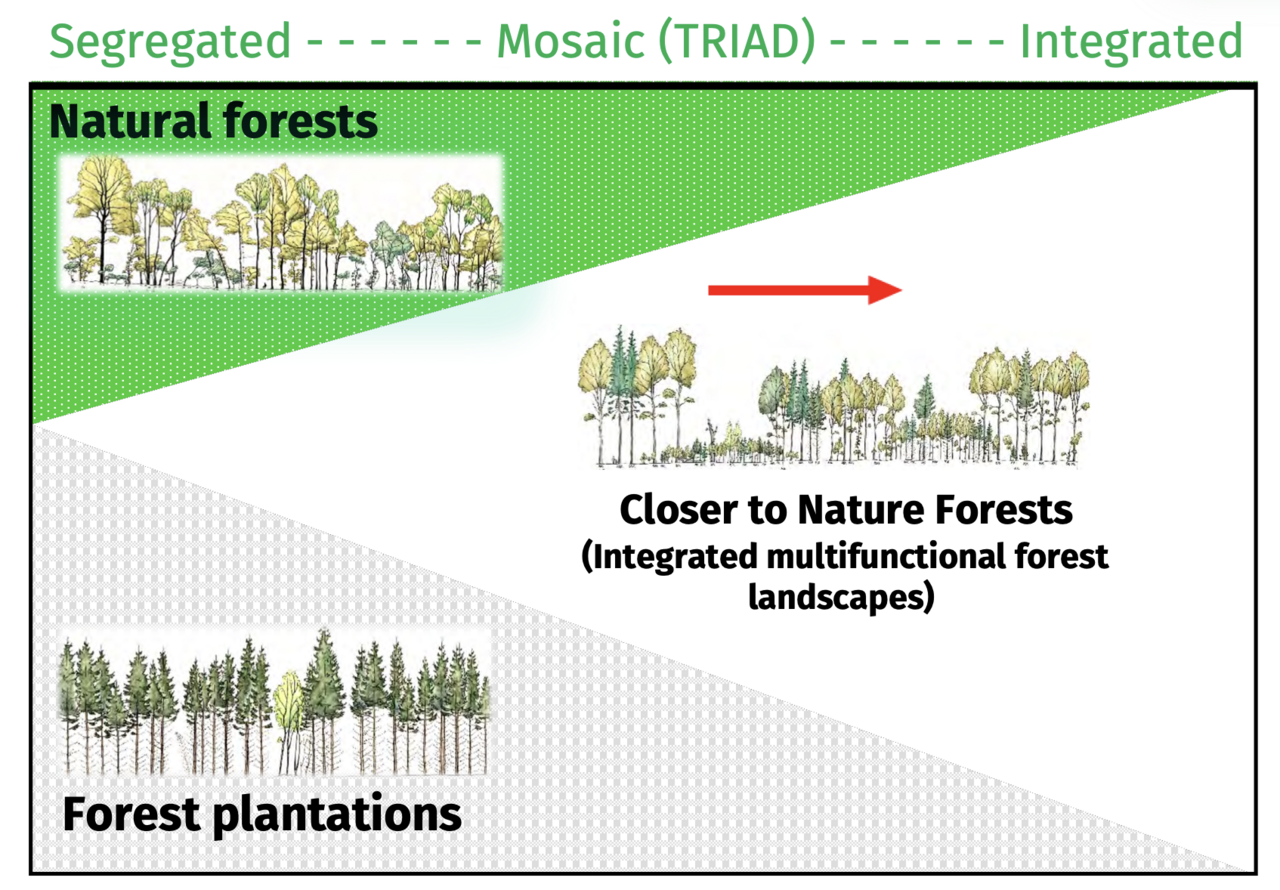
Closer-to-Nature Forest Management
The report reviews pressures on forest biodiversity, health, and resilience. It assesses nature-oriented forest management methods for supporting biodiversity and adaptability, and identifies key barriers and enablers for implementing Closer-to-Nature Forest Management.
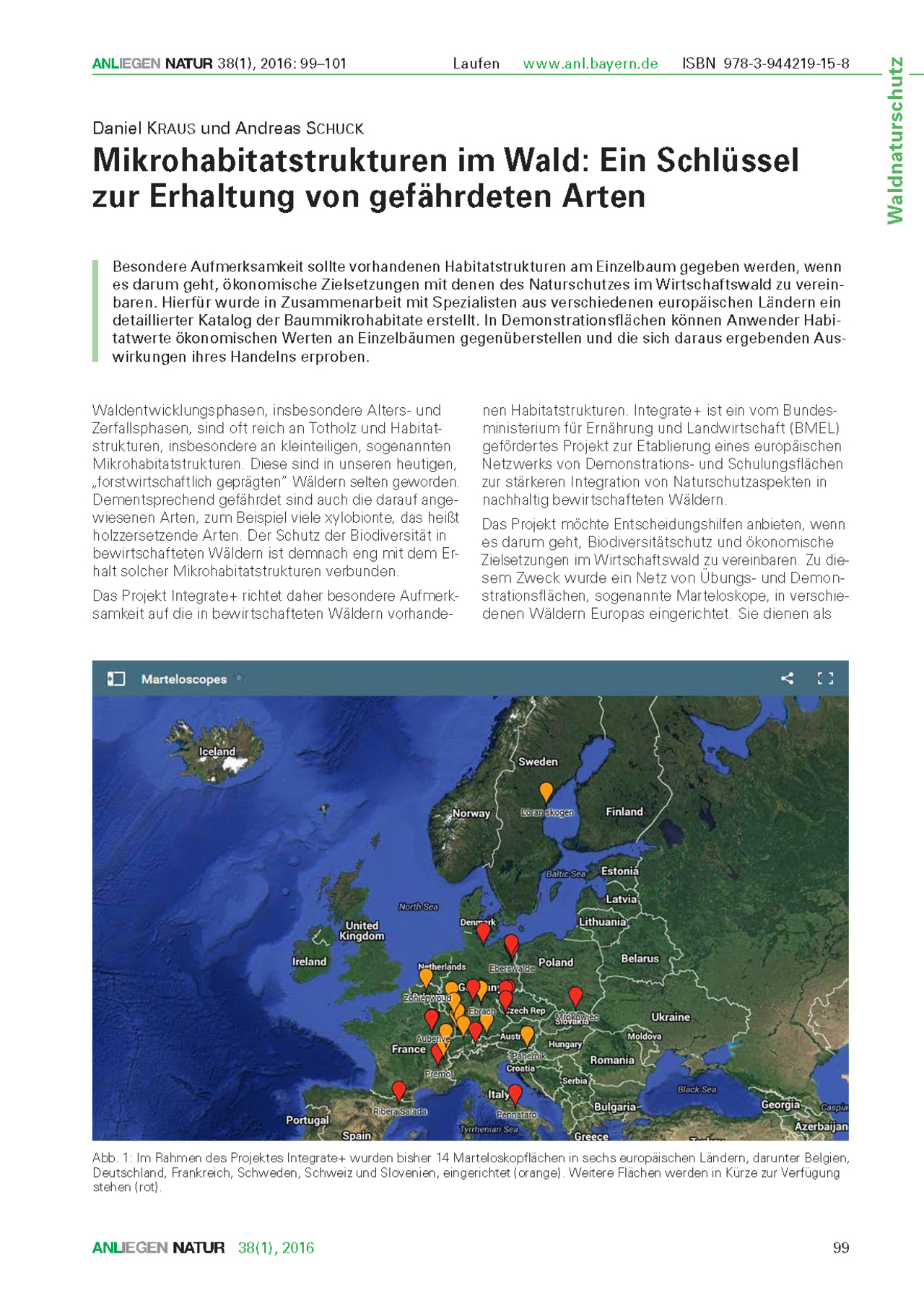
Tree microhabitats in forests: a key to protecting endangered species
The publication highlights the importance of tree microhabitats for biodiversity conservation in managed forests. It focuses on the European project Integrate+, which uses marteloscopes and digital tools to illustrate the ecological and economic impacts of forestry decisions. It also presents a standardised catalogue for identifying and assessing tree microhabitats, such as cavities, deadwood, cracks and fungal growth. The publication demonstrates how habitat trees and microhabitats contribute to protecting endangered species and integrating nature conservation more effectively into sustainable forest management.
- Implementation
- Integrative Forest Management
- Monitoring & Projecting
- Social & Stakeholder
- Landowners & Practitioners
- Planners & Implementers
- Policy Actors
- Natural processes and ecosystem preservation
- Other protective and regulatory functions
- Specific habitats (deadwood, microhabitats, habitat types,...)
- Specific species (other than trees)
- Structural diversity
- Alpine
- Continental
- Austria
- Czechia
- France
- Germany
- Italy
- Poland
- Slovenia
- Spain
- Sweden
- Switzerland
Catalogue of tree microhabitats – Reference field list
This document provides a standardized field guide for identifying and recording tree microhabitats in forests. Developed within the Integrate+ project, it supports forest managers, inventory teams, educators, and researchers in assessing habitat features that are essential for biodiversity conservation. The guide presents a comprehensive classification system with codes, definitions, illustrations, and descriptions of microhabitats such as cavities, deadwood, bark structures, wounds, fungi, epiphytes, nests, and other specialized habitat features. By improving the identification and retention of habitat trees and biodiversity-rich structures, the guide helps integrate nature conservation objectives into sustainable forest management and supports the protection of species that depend on old trees, deadwood, and microhabitats.
- Implementation
- Integrative Forest Management
- Monitoring & Projecting
- Social & Stakeholder
- Landowners & Practitioners
- Planners & Implementers
- Policy Actors
- Natural processes and ecosystem preservation
- Other protective and regulatory functions
- Specific habitats (deadwood, microhabitats, habitat types,...)
- Specific species (other than trees)
- Structural diversity
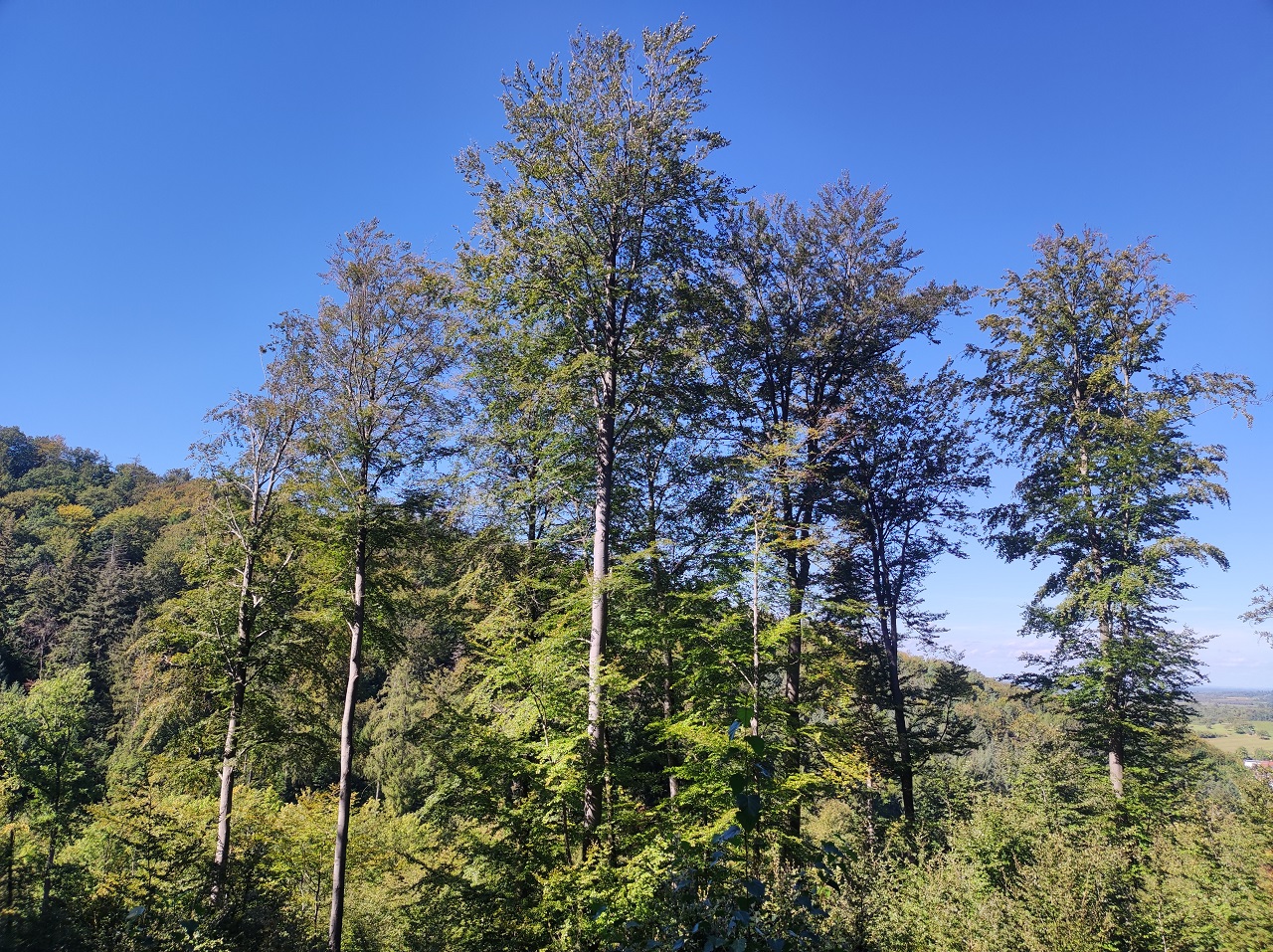
Effects of habitat tree retention on adjacent advance regeneration in continuous-cover forests in Central Europe
Habitat trees are retained in managed forests to provide important habitats and enhance biodiversity. This new study examines how habitat tree retention affects the height, basal area and species composition of advance regeneration in continuous-cover forests, which is important for managers aiming to balance biodiversity conservation and timber production objectives.